Blog
-
The Gentle Art of Growing a Collection: How Small Discoveries Build into Something Magnificent
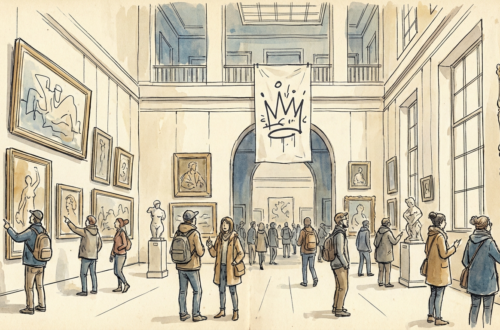
Understanding the Collector’s Eye Before You Spend a Dime Before you buy your first piece, spend months training your eye like a detective learning to read crime scenes. Visit every gallery opening in your neighborhood, even the ones in converted warehouses where wine comes in plastic cups and the artist’s statement mentions “exploring the liminal space between.” Study how your pulse quickens when you encounter certain color combinations. Notice how your breathing changes when you’re face-to-face with particular scales of work. Which pieces make you linger? Which ones do you walk past without a second glance? This detective work costs nothing but time, yet it’s the foundation of every meaningful…
-
Why We’re Reading Religious Art All Wrong: The Rebellion Hidden in Sacred Symbols
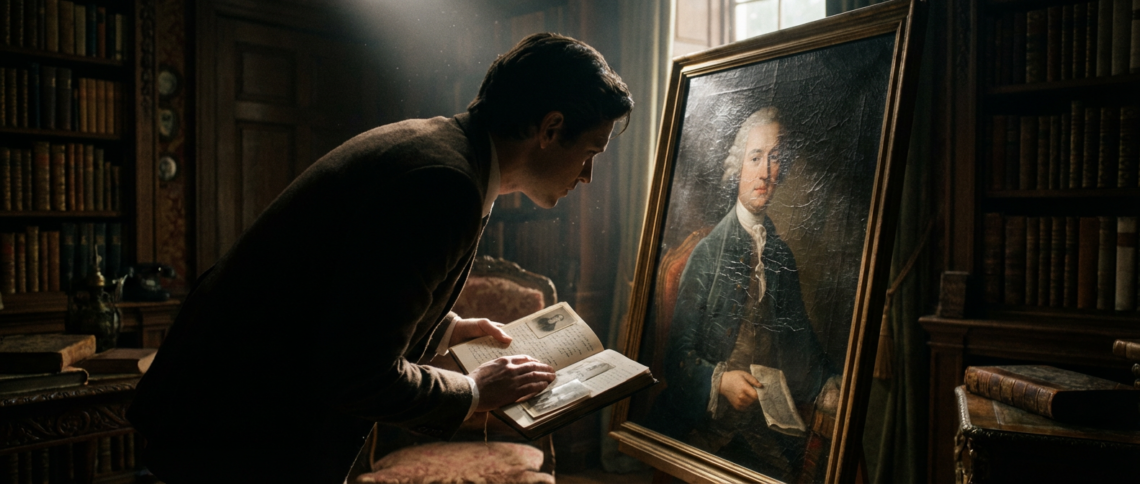
The Heresy of Looking Beyond the Obvious Walk into any major museum and watch visitors pause before a Renaissance Madonna. They’ll nod appreciatively at the serene expression, maybe comment on the blue robes, then move on. But here’s what they’re missing: that peaceful Virgin Mary might actually be a coded manifesto of resistance, her every gesture a deliberate challenge to the very authority that commissioned the painting. We’ve been trained to see religious art as passive devotional objects, when in reality, these works pulse with subversive energy that would make modern political artists envious. Why We’re Reading Religious Art All Wrong: The Rebellion Hidden in Sacred Symbols Consider Caravaggio’s “Judith…
-
Why Artemisia Gentileschi’s Blood Drips the Same Direction as Kehinde Wiley’s Flowers
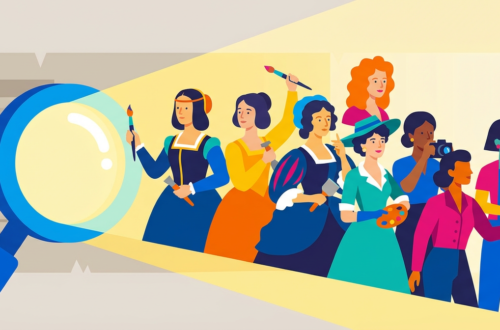
The Museum Wall That Lies Stand in any major museum and count the women’s names on the wall plaques. In the Metropolitan Museum’s European paintings wing, you might find one Artemisia Gentileschi canvas surrounded by dozens of works by her male contemporaries. Walk through the Modern Art galleries and you’ll spot a Georgia O’Keeffe flower, perhaps a Helen Frankenthaler color field, scattered among walls dominated by Picasso, Pollock, and de Kooning. The wall suggests women simply weren’t making art worth preserving. But here’s what those clean white walls don’t tell you: for every Artemisia whose “Judith Slaying Holofernes” hangs in the Uffizi, there were dozens of women painters working in…
-
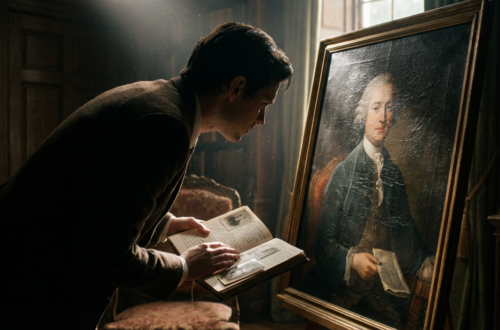
The Silent Conversations: How Portrait Paintings Whisper Their Secrets
Standing Before the Canvas I’m standing three feet from Kehinde Wiley’s “Napoleon Leading the Army over the Alps” at the Brooklyn Museum, watching visitors pause mid-stride. Their faces shift from casual gallery browsing to something closer to recognition, then puzzlement. The young Black man in Nike sneakers and camouflage bandana sits in Napoleon’s exact pose from Jacques-Louis David’s 1801 masterpiece, but everything else screams 21st century. A woman beside me whispers to her companion, “Is that supposed to be Napoleon?” She’s asking the right question, just not in the way she thinks. The Silent Conversations: How Portrait Paintings Whisper Their Secrets This is where portrait reading begins. Not with art…
-
When Colors Sing and Sounds Paint: The Hidden Conversations Between Music and Visual Art
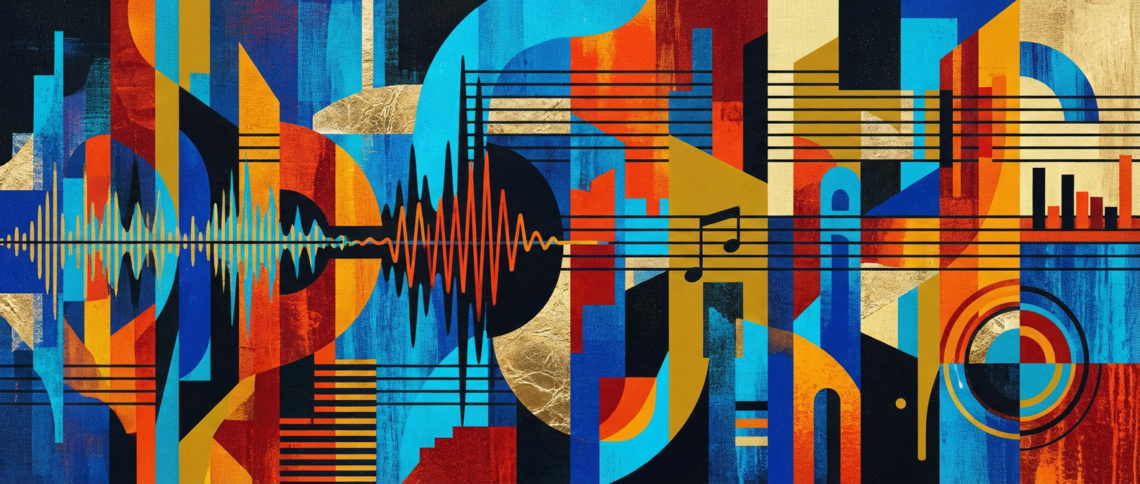
The Rhythm of Brushstrokes: How Abstract Expressionism Found Its Beat Picture Jackson Pollock in his studio, paint dripping from sticks and brushes in what appears to be chaotic abandon. Yet if you listen carefully to recordings of him working, you hear something remarkable: rhythm. The same syncopated patterns that defined bebop jazz were finding their way onto canvas through Pollock’s gestural movements. This wasn’t coincidence. Pollock and his contemporaries were regular fixtures at New York’s jazz clubs, absorbing the improvisational energy that Charlie Parker and Dizzy Gillespie were pioneering just blocks away from their studios. When Colors Sing and Sounds Paint: The Hidden Conversations Between Music and Visual Art The…
-
The Secret Language of Color: How Master Painters Unlocked Visual Psychology
When Blue Meant More Than Sky: Understanding Color’s Hidden Grammar Stand before Yves Klein’s “IKB 191” and you’re not just looking at blue paint on canvas. You’re seeing a revolution that started centuries ago when artists first realized that color works like a language, complete with grammar, syntax, and emotional vocabulary. Klein’s patented International Klein Blue doesn’t just represent the sky or ocean. It pulses with an intensity that seems to extend infinitely inward and outward at the same time, much like the ultramarine that medieval illuminators ground from precious lapis lazuli to capture divine transcendence. This same blue appears in Vermeer’s “Girl with a Pearl Earring,” where the expensive…