Artoong – Your Source for Artoong Content

Art, culture, and the conversations that matter.

  • Home
  • Reviews
  • Interviews
  • Features
  • Photography
  • Music
  • Home
  • Reviews
  • Interviews
  • Features
  • Photography
  • Music

No Widgets found in the Sidebar Alt!

Blog

Why Every Dictator Hates a Cartoonist More Than a Columnist

Picture two troublemakers in a dictator’s crosshairs. One writes 3,000 words dissecting the regime’s economic failures—complete with footnotes and a polite call for reform. The other draws a single image:…

read more
10 May 2026
Blog

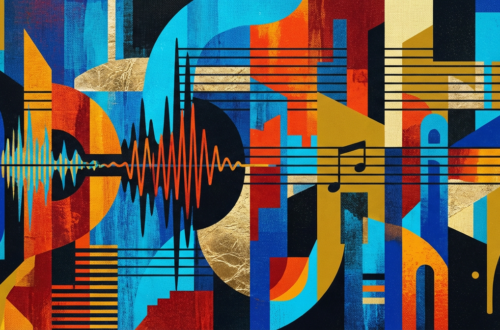
When Colors Sing and Sounds Paint: The Hidden Conversations Between Music and Visual Art

The Rhythm of Brushstrokes: How Abstract Expressionism Found Its Beat Picture Jackson Pollock in his studio, paint dripping from sticks and brushes in what appears to be chaotic abandon. Yet…

read more
7 March 2026
Blog

Venice 2026 and the Ongoing Revolution: How the ‘Stranieri Ovunque’ Legacy Is Permanently Changing the Biennale

The Moment That Changed Everything There’s a particular kind of electricity that runs through the art world when something genuinely shifts beneath the surface. That’s what happened in 2024 when…

read more
17 March 2026
  • Blog

    Artoong

    22 February 2026 /

    Artoong Art, culture, and the conversations that matter. Browse Latest Posts We think culture writing should be as bold as the work it covers. Our critics and contributors write about music, visual art, film, and performance with the care and attention these forms deserve. Sometimes that means getting deep into the weeds of technique. Other times it means stepping back to see the bigger picture. Topics we cover: Visual Art · Music · Film & TV · Performance · Photography · Criticism

    read more
    Keith Gonzales Comments Off on Artoong

    You May Also Like

    The Legacy of Looking: How Great Collections Begin with Small Gestures

    8 March 2026

    Why Your First Home Studio Should Ignore Every Setup Guide You’ve Read

    5 March 2026

    The Quiet Revolutionaries: Small Town Museums That Changed How We See Art

    8 March 2026
  • Blog

    The Half-Second Delay: Why the Best Cartoons Make You Laugh and Then Think

    16 September 2026 /

    You laugh. Half a second later, you find out what you laughed at. That tiny delay — the beat between the laugh and the thought — is the whole engine of the form, and it is the least examined half-second in public life. Psychologists call part of the mechanism incongruity resolution. Arthur Koestler called the underlying move bisociation. Working cartoonists mostly call it “the second read.” Whatever name it answers to, the best cartoons make you laugh and then think because the laugh and the thought are two detonations of the same charge — and the pause between them is where the cartoon does its real work. The Laugh Is…

    read more
    Keith Gonzales Comments Off on The Half-Second Delay: Why the Best Cartoons Make You Laugh and Then Think

    You May Also Like

    Why Your First Home Studio Should Ignore Every Setup Guide You’ve Read

    5 March 2026

    What Retrospective and legacy writing Reveals About Film festivals and independent cinema in 2026

    26 February 2026

    Why We’re Reading Religious Art All Wrong: The Rebellion Hidden in Sacred Symbols

    7 March 2026
  • Blog

    How Color Theory Shapes Emotional Response in Political Art

    2 September 2026 /

    Color theory is the study of how hues interact, contrast, and influence perception. In political art, it is not decoration. It is argument. A red background does not merely look angry; it borrows the visual grammar of emergency, blood, and stop signs. A washed-out palette does not just feel sad; it implies neglect, faded memory, or bureaucratic exhaustion. For cartoonists, illustrators, and meme-makers, color is a second caption—one that works before the viewer reads a single word. This matters to anyone who draws lines in public, because the line says what happened, but the color says how to feel about it. Political art has always leaned on color as shorthand.…

    read more
    Keith Gonzales Comments Off on How Color Theory Shapes Emotional Response in Political Art

    You May Also Like

    qjognxkmkt

    Quantum Computing: The New Frontier of Innovation

    23 May 2025

    When Colors Sing and Sounds Paint: The Hidden Conversations Between Music and Visual Art

    7 March 2026

    MoMA’s Basquiat Retrospective: Institutional Validation or Decades-Late Recognition?

    14 March 2026
  • Blog

    How Thumbnail Sketches Reveal What Cartoonists Actually Think Before They Polish

    1 September 2026 /

    Twenty thumbnail sketches of the same politician sit on my desk. Every one of them is wrong. Not wrong the way a finished drawing is wrong—a misplaced shadow, a likeness that drifts between sessions. Wrong the way a sentence is wrong when the structure underneath it hasn’t been thought through. The line is fine. The idea hasn’t landed. [SKETCH: A grid of twenty small pencil thumbnails, each roughly two inches square, showing the same figure in different compositional arrangements—some tiny in a vast empty frame, some looming with jowls filling the panel, one with his back turned, one reduced to a silhouette against a window. Most are crossed out with…

    read more
    Keith Gonzales Comments Off on How Thumbnail Sketches Reveal What Cartoonists Actually Think Before They Polish

    You May Also Like

    Genshin Impact Five Years In: How HoYoverse Keeps Its Fantasy World Fresh

    5 March 2026

    Why Your First Home Studio Should Ignore Every Setup Guide You’ve Read

    5 March 2026

    The Death and Rebirth of Street Art: How Public Murals Conquered the Gallery

    5 March 2026
  • Blog

    The Ethics of Drawing Historical Figures in Satire

    31 August 2026 /

    Historical figures are the easiest targets in a cartoonist’s arsenal—and the hardest to draw well. They show up pre-costumed, pre-scripted, pre-judged. Give Napoleon a hand tucked in his coat, Lincoln a stovepipe hat, Cleopatra a snake, and the audience does half the work. But the moment ink hits paper, you’re not just drawing a person. You’re drawing a memory, a myth, a classroom lesson, a national wound, a family heirloom. The ethics of satirizing the dead isn’t about being polite to ghosts. It’s about being honest with the living. This is where visual satire does its strangest work. A cartoon of a living politician is a provocation. A cartoon of…

    read more
    Keith Gonzales Comments Off on The Ethics of Drawing Historical Figures in Satire

    You May Also Like

    The Death and Rebirth of Street Art: How Public Murals Conquered the Gallery

    5 March 2026
    tenfbsvjuz

    Breaking the Chains: The Revolutionary Potential of Blockchain

    16 May 2025

    The MoMA Basquiat Retrospective: When Institutional Validation Becomes a Mirror for Our Own Contradictions

    17 March 2026
  • Blog

    Why Drawing Is Thinking: The Case for Visual Argument

    26 August 2026 /

    Visual argument is not a picture that happens to have an opinion. It is a claim made with line, weight, and negative space—a form of reasoning that works before words arrive. In the world of editorial cartooning, syndicated strips, webcomics, and the occasional well-aimed meme, the drawing is the argument. It names a target, sets a frame, and asks the reader to complete the joke. That completion is the thinking. This article is for anyone who suspects that a well-drawn line can do more than decorate a page—it can cross-examine a politician, puncture a press release, and leave a bruise that a thousand-word op-ed would envy. Cartooning as civic practice…

    read more
    Keith Gonzales Comments Off on Why Drawing Is Thinking: The Case for Visual Argument

    You May Also Like

    The Secret Language of Color: What Masterpieces Reveal About How We See

    8 March 2026

    Why We’re Reading Religious Art All Wrong: The Rebellion Hidden in Sacred Symbols

    7 March 2026

    The Hidden Conversations: How Lost Women Artists Speak Across Centuries

    5 March 2026
  • Blog

    How Political Cartooning Has Changed Since the Internet

    25 August 2026 /

    Political cartooning is the art of drawing an argument. It is a visual shorthand for civic anger, absurdity, and hope—a line that says what a thousand editorials cannot. Adjacent to it sit editorial illustration, satirical comics, caricature, and the newer, messier world of memes. For readers of this blog, the question is not whether cartoons still matter. The question is how the internet has bent the old rules, broken a few, and handed the pen to everyone with a phone. I have been drawing for newspapers, then websites, then newsletters, and now whatever platform has not collapsed this month. The tools changed. The deadlines changed. The audience changed. But the…

    read more
    Keith Gonzales Comments Off on How Political Cartooning Has Changed Since the Internet

    You May Also Like

    tenfbsvjuz

    Breaking the Chains: The Revolutionary Potential of Blockchain

    16 May 2025

    Independent art and the economics of making work — An Honest Critical

    21 February 2026

    MoMA’s Basquiat Retrospective: Institutional Validation or Decades-Late Recognition?

    14 March 2026
 Older Posts

Recent Posts

  • The Half-Second Delay: Why the Best Cartoons Make You Laugh and Then Think
  • How Color Theory Shapes Emotional Response in Political Art
  • How Thumbnail Sketches Reveal What Cartoonists Actually Think Before They Polish
  • The Ethics of Drawing Historical Figures in Satire
  • Why Drawing Is Thinking: The Case for Visual Argument
Ashe Child Theme by Anonymous.