Why Artemisia Gentileschi’s Blood Drips the Same Direction as Kehinde Wiley’s Flowers
The Museum Wall That Lies
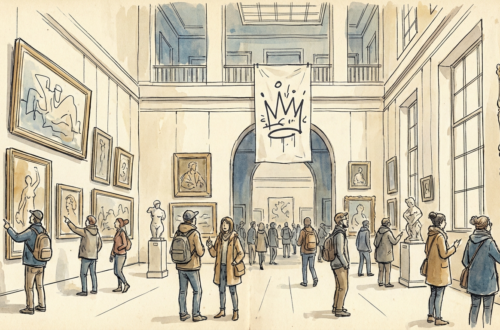
Stand in any major museum and count the women’s names on the wall plaques. In the Metropolitan Museum’s European paintings wing, you might find one Artemisia Gentileschi canvas surrounded by dozens of works by her male contemporaries. Walk through the Modern Art galleries and you’ll spot a Georgia O’Keeffe flower, perhaps a Helen Frankenthaler color field, scattered among walls dominated by Picasso, Pollock, and de Kooning. The wall suggests women simply weren’t making art worth preserving.
But here’s what those clean white walls don’t tell you: for every Artemisia whose “Judith Slaying Holofernes” hangs in the Uffizi, there were dozens of women painters working in the same studios, using the same techniques, selling to the same patrons. The difference wasn’t talent or training. The difference was whose signature survived on the bottom right corner, and whose got painted over or attributed to a more famous man.
When Attribution Becomes Archaeology
Take Plautilla Nelli, a 16th-century Florentine nun who ran what was essentially an all-female art studio inside her convent. Her massive “Last Supper” painting, measuring over twenty feet wide, hung in the Santa Maria Novella refectory for centuries. Art historians knew someone had painted it, but they kept attributing it to various male artists. It wasn’t until 2015 that scholars definitively proved Nelli’s authorship through X-ray analysis and historical records showing she’d purchased the specific ultramarine pigments used in the work.
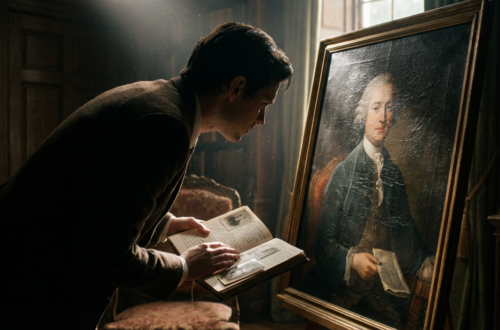
The same pattern repeats across centuries. Judith Leyster’s paintings were attributed to Frans Hals for over 200 years until a 1893 cleaning revealed her distinctive signature hidden under layers of overpaint. Her “Self-Portrait” shows her mid-brushstroke, wearing the same type of loose painting smock that Hals wore, using the same confident brushwork that characterized the Haarlem school. The only difference was the JL* monogram that someone had decided wasn’t worth preserving.
This isn’t just historical oversight. It’s active erasure. When Clara Peeters painted her detailed still lifes in early 17th-century Antwerp, she was working in the same guilds, selling to the same collectors, and experimenting with the same new techniques as her male colleagues. Her “Still Life with Cheeses, Almonds and Pretzels” demonstrates a technical mastery of reflective surfaces that rivals any Dutch master. Yet while Pieter Claesz and Willem Heda became household names, Peeters disappeared from art history until feminist scholars began systematically researching guild records in the 1990s.
The Economics of Invisible Labor
Women artists didn’t just vanish from history books. They were systematically excluded from the economic systems that sustained artistic careers. Sofonisba Anguissola became court painter to Philip II of Spain in 1559, yet she received a “pension” rather than the standard artist’s salary, framing her work as noble charity rather than professional expertise. When she painted Philip’s third wife, Elisabeth of Valois, she captured the same psychological depth and technical sophistication that made Titian famous. But because her payment was classified as royal favor rather than artistic commission, her professional status remained ambiguous.
The workshop system that trained Renaissance masters was largely closed to women, forcing them to learn through family connections or religious institutions. Marietta Robusti, Tintoretto’s daughter, painted portraits with the same dramatic lighting and psychological intensity that made her father’s reputation. Her “Self-Portrait as Saint Catherine of Alexandria” shows her wielding both paintbrush and palm frond, claiming space as both artist and saint. Yet because she couldn’t join the painter’s guild, her works were often sold under Tintoretto’s name, increasing their market value while erasing her individual style.
Parallel Innovations Hidden in Plain Sight
What gets really interesting when you start connecting these dots is how women artists were often pushing the same boundaries, exploring the same visual problems, and arriving at similar innovative solutions as their celebrated male contemporaries. Elisabeth Vigée Le Brun was experimenting with outdoor lighting effects and informal portraiture compositions in the 1780s, the same techniques that would later define Impressionism. Her “Marie Antoinette with a Rose” abandons the rigid formality of court portraiture for a more naturalistic approach that captures fleeting expression and ambient light.
Maria Sibylla Merian was combining scientific observation with artistic innovation in ways that parallel what we celebrate in Leonardo’s notebooks. Her “Metamorphosis of the Insects of Suriname” documents butterfly life cycles with the same methodical precision and visual beauty that characterizes the best natural history illustrations. She was working from live specimens, developing new color techniques, and creating compositions that function as both scientific document and aesthetic object. Yet while Leonardo’s interdisciplinary approach gets framed as genius, Merian’s similar work gets categorized as craft or botanical illustration.
The comparison extends to technique itself. When you examine Artemisia’s “Susanna and the Elders” next to Caravaggio’s religious paintings, you see the same dramatic chiaroscuro lighting, the same psychological intensity, the same innovative use of diagonal composition. The difference is that Artemisia’s version centers the female experience in a way that Caravaggio’s male gaze never could. Her Susanna isn’t posed for titillation. She’s genuinely distressed, her body language conveying real fear rather than erotic invitation.
What Contemporary Art Teaches Us About Looking Back
Modern artists like Kehinde Wiley and Amy Sherald are doing something crucial: they’re making the absence visible. When Wiley places young Black men in poses traditionally reserved for European nobility, or when Sherald paints Black subjects against flat, decorative backgrounds that echo Byzantine icons, they’re not just creating new work. They’re revealing how much representational power we’ve taken for granted in traditional portraiture.
This same lens transforms how we see historical women artists. Artemisia’s blood doesn’t just drip dramatically in “Judith Slaying Holofernes” because she understood Caravaggio’s lighting techniques. It drips with the psychological weight of someone who understood violence against women from the inside. When contemporary artist Kara Walker creates her silhouette installations examining slavery and power, she’s using the same strategy Artemisia used: turning decorative artistic traditions into vehicles for political truth-telling.
The real revelation isn’t that women were making art all along. It’s that they were often making it better, bringing perspectives and innovations that their male contemporaries couldn’t access. When you start looking for them, you find techniques, compositions, and ways of seeing that completely reshape our understanding of how art actually developed. The question isn’t why we lost these artists. The question is what else we’re missing when we mistake the museum wall for the whole story.