Independent art and the economics of making work — An Honest Critical
Let’s work through what is actually happening here, step by step. The topic of independent art and the economics of making work rewards more careful attention than the typical coverage provides, and the reason is not complicated once you know where to look.
The useful question to ask at this point is, viewed through the lens of critical dissent, is Bandcamp and Patreon model allowing direct artist-to-fan economics to flourish. The confident read of the situation is also the more accurate one once you examine what the evidence actually shows.

The Dissent: Setting the Terms
Artist income from streaming platforms averages under $500 per year for the bottom 90 percent. This isn’t just another statistic about independent artists. It’s the basic economic reality that makes everything else in this discussion make sense. This stuff doesn’t change overnight. The conditions that produced it have been building for years, and what we’re seeing now is different from earlier moments that looked similar on the surface.
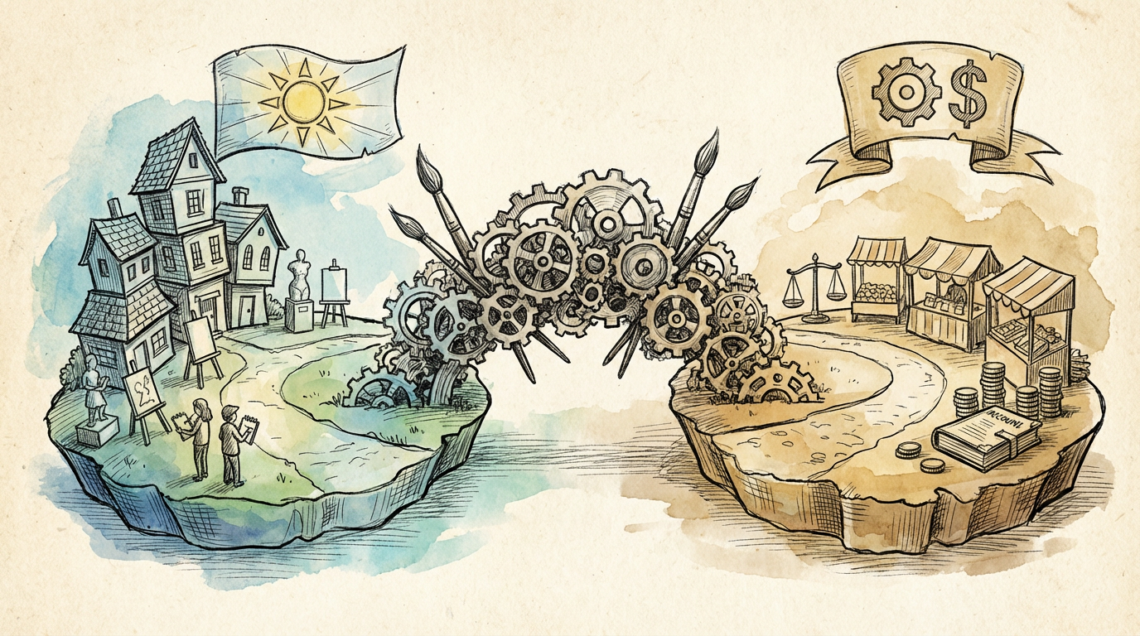
You’ve got Bandcamp and Patreon creating direct artist-to-fan economics while studio space in major cities prices artists out completely. Look at both together, and you see a pattern that Artsy contemporary art has been tracking from the inside. These conditions are sticking around longer than most people expected, and the effects go way beyond what the headlines suggest.
To understand why this matters, compare what was happening three years ago to now. The change isn’t just about numbers getting bigger or smaller. The players have changed. The infrastructure has changed. The incentive structures have changed. And all these changes are building on each other instead of canceling out. That snowball effect is what you really need to watch.
What makes this moment worth paying attention to isn’t that it’s totally new. It’s that the patterns we’ve been seeing for a while have finally gotten big enough that you have to actively ignore them to miss them. That’s the real event here, not the underlying movement that created it.
And artist residency programs growing as an alternative to the commercial gallery system? That’s part of the same picture. These aren’t separate trends happening in isolation. They’re all connected pieces of the same big shift.
The Hot Take: The Analysis
Artist residency programs growing as alternatives to commercial galleries is where things get specific. The obvious reading isn’t wrong, but it misses how this actually works, and the mechanics are where you find the useful insights. The real question is about NFT speculation collapsing while on-chain provenance tools stay useful. Understanding that changes what you do with all this information.
Think about what it means that NFT speculation collapsed but the provenance tools stuck around. This isn’t just a coincidence. It’s what happens when structural factors have been building up for years. Earlier attempts to read similar situations failed because people confused symptoms with causes. The structural explanation is less sexy as a headline but way more useful for actually understanding what’s happening.
The comparison to previous cycles matters because of where it breaks down. Similar-looking situations played out differently before because the foundation was different. AI image generation creating new conversations about originality and authorship isn’t just another variable. It’s a foundation change, the kind that alters how flexible the whole system is, not just where it sits right now. Getting that distinction is what separates real analysis from just matching patterns.
The skeptical take deserves a real response here. Previous moments that looked like this didn’t produce the logical outcomes people expected. That history is real. But what’s different now is AI image generation creating new conversations about originality and authorship. That’s not a small detail, it’s the infrastructure that previous cycles didn’t have. Infrastructure changes tend to stick around in ways that mood-driven changes don’t. Hyperallergic art criticism is tracking this angle with the rigor it deserves.
There’s also a question about distribution that most coverage of independent art economics just skips. Who actually gets the value from these shifts, and who eats the disruption costs? The big picture can look positive while the distribution is completely unfair in ways that matter enormously to actual people trying to make work. Keeping that lens in view is part of reading the situation clearly, not just optimistically.
Implications: What This Means If You Care About Overrated works
The effects of independent art economics extend way beyond the immediate story. Artist income from streaming platforms averaging under $500 per year for the bottom 90 percent, combined with everything described above, creates ripple effects in adjacent fields and communities that aren’t always visible if you’re just focused on the main narrative. The second-order effects are often more important than the obvious ones, and that’s where careful attention actually pays off.
Here’s where this perspective differs from mainstream coverage: studio space costs pricing artists out of major cities is a leading indicator, not a lagging one. People positioned to respond to what this signals, rather than what it confirms, won’t be as surprised by what comes next.
What you should actually do depends heavily on where you sit relative to these dynamics. If you’re close to the core of independent art economics, the implications are immediate and operational. If you’re further out, they’re strategic, about understanding which pressures are building and which assumed stabilities are more fragile than they look.
The practical question isn’t whether to engage with these dynamics but how. That depends on context, on your role relative to independent art economics and what your actual decision timeline is. But the first step is the same regardless: accurate understanding of what’s actually happening rather than what the most available narrative says is happening.
A few concrete points worth pulling out from the broader analysis. First: Bandcamp and Patreon allowing direct artist-to-fan economics isn’t temporary, it’s a new baseline. Second: NFT speculation collapsing but provenance tools remaining suggests the adjustment period isn’t over. Third, and most important: organizations and individuals treating the current moment as a new steady state rather than a transition are making an error that will be expensive to fix later.
The Case Against: What the Critics Get Right
Honest analysis requires engaging with the strongest counterarguments, not just the weak ones. The case against the optimistic reading of independent art economics isn’t trivial. There are real structural vulnerabilities here that deserve direct engagement, not dismissal.
The most serious objection is about sustainability. Studio space costs pricing artists out of major cities could be read not as a foundation but as a ceiling, a point where growth becomes self-limiting because of the very dynamics that created it. If we’ve already incorporated most of the early adopters willing to participate, the remaining growth curve might be structurally shallower than recent trends suggest.
Then there’s policy and regulation. Artist income from streaming platforms averaging under $500 per year describes conditions in a relatively permissive environment. Regulatory responses to the scale these numbers imply aren’t inevitable, but they’re not implausible either. Organizations planning as though the current regulatory environment is permanent are making an assumption that the history of fast-growing sectors doesn’t support.
The response to these concerns isn’t that they’re wrong. It’s that they’re already partially built into the current state of the field. AI image generation creating new conversations about originality and authorship reflects an environment where participants are already adapting to constraints rather than operating without limits. The ecosystem’s ability to adjust is higher than a purely top-down view of the risks suggests.
Looking Forward
The direction here is clearer than the timing. Making predictions about when specific thresholds will be crossed is genuinely hard, and anyone claiming precision about timelines should be treated with skepticism. But the direction, toward artist income from streaming platforms averaging under $500 and continued development of the conditions described above, is supported by evidence in a way that doesn’t depend on a single variable going right.
AI image generation creating new conversations about originality and authorship is the variable to watch as the leading indicator. Historical patterns suggest it moves first, with broader metrics following with some lag. This doesn’t make outcomes certain, but it makes them readable, and readability is what you need for good decisions.
Three questions are worth holding as this story develops. First: are the structural conditions that enabled the current state durable, or are they cyclical? Second: who benefits from the next phase, and does that differ materially from who benefited in the current phase? Third: what would clean proof against the optimistic thesis look like, and is there any evidence of that signal emerging? These questions don’t need answers today, but asking them changes what you notice in the months ahead.
For most people reading this, the next step is small. The current moment in independent art economics is one where people who have built an accurate model of the underlying dynamics are better positioned than people relying on the surface story. Building that model isn’t quick, but it’s doable, and this analysis is meant as one input into it.
Come for me in the comments. I’m interested in why you disagree.