The Death and Rebirth of Street Art: How Public Murals Conquered the Gallery
The End of Outlaw Art
Street art, as we once knew it, is dead. The movement that began in subway tunnels and abandoned warehouses, born from rebellion and necessity, has been completely absorbed into the very establishment it once challenged. What remains is something different: a sanitized, commodified version of its former self, where anonymous artists command eight-figure market valuations and city councils commission murals to replace corporate advertising hoardings. The transformation has been so complete that visitors to major cities now rank street art tours among their top five activities, according to travel platforms like TripAdvisor.
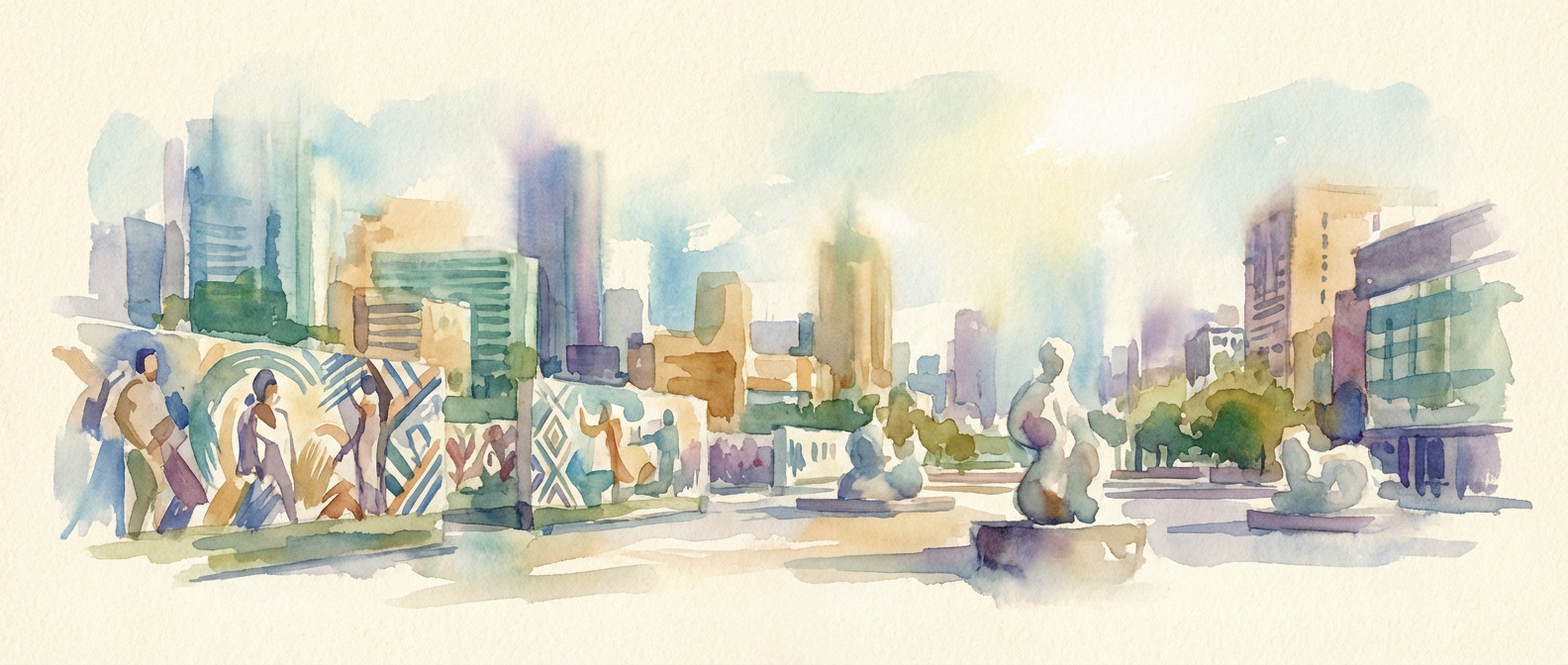
This isn’t necessarily a tragedy, though. The death of underground street art has given birth to something more complex and far-reaching: a legitimate public art movement that transforms urban landscapes while struggling with questions of authenticity, ownership, and artistic integrity. The ghost of the old movement haunts every sanctioned mural, every legal wall, every carefully curated outdoor gallery that once might have housed truly rebellious work.
The change reflects broader cultural shifts in how we consume and value art. Where once street artists worked in shadows, dodging authorities and creating temporary works destined for quick removal or natural decay, today’s practitioners navigate bureaucratic approval processes, insurance requirements, and preservation concerns. The spontaneity that defined the movement’s early decades has largely vanished, replaced by calculated permanence.
The Banksy Paradox and Market Forces
No figure represents this transformation more completely than Banksy, whose continued anonymity has only boosted commercial appeal. Annual sales of works attributed to the mysterious British artist now exceed one hundred million dollars, creating a strange ecosystem where invisibility generates unprecedented visibility. The artist’s refusal to reveal their identity has become the ultimate brand strategy, proving that mystery can be more valuable than celebrity in contemporary art markets.
This paradox exposes the core tension within modern street art: the movement’s anti-establishment roots directly conflict with its current market position. Banksy’s works, originally created as temporary interventions in public space, now command auction prices that place them firmly within elite collecting circles. The irony is intentional and profound. An artist whose early work criticized capitalist excess has become one of its most successful products.
The market’s embrace of street art has created ripple effects throughout the movement. Widewalls street art coverage documents how emerging artists increasingly create work with eventual commercial viability in mind, fundamentally altering the creative process. Knowing that today’s illegal mural might become tomorrow’s gallery exhibition changes everything about artistic decision-making, from material choices to compositional strategies.
Urban Planning and the Institutionalization of Rebellion
City governments have discovered that controlled street art programs offer multiple benefits. They reduce illegal graffiti, attract cultural tourism, and contribute to neighborhood revitalization efforts. This realization has led to widespread adoption of mural programs as urban planning tools, with commissioned artworks replacing traditional advertising spaces in downtown cores and emerging neighborhoods alike. The strategy acknowledges street art’s power while neutering its subversive potential.
The challenge facing municipal authorities involves balancing removal of unauthorized graffiti with investment in sanctioned public art initiatives. This delicate balance requires sophisticated understanding of local art communities and their relationship to place. Cities that succeed often see remarkable transformations: formerly neglected districts become cultural destinations, property values increase, and civic pride grows. Those that fail risk either creative stagnation or uncontrolled proliferation of illegal work.
Artist collectives have responded by reclaiming abandoned buildings and vacant lots as temporary exhibition spaces, creating pop-up galleries that operate in legal gray areas. These initiatives represent attempts to maintain street art’s experimental edge while working within increasingly regulated urban environments. The temporary nature of these installations echoes the movement’s temporary origins while adapting to contemporary realities of property ownership and development pressure.
Technology and the Digital Canvas
Digital projection mapping has emerged as street art’s newest frontier, extending the medium beyond traditional paint and surface limitations. Artists can now create interactive experiences that respond to environmental conditions, pedestrian movement, or real-time data feeds. This technological evolution represents both evolution and revolution, maintaining street art’s public accessibility while introducing entirely new possibilities for engagement and expression.
The digital dimension addresses some traditional limitations of street art, particularly issues of permanence and weather resistance. Projected works can be updated, modified, or completely replaced without physical intervention in urban infrastructure. This flexibility appeals to both artists seeking dynamic creative possibilities and administrators concerned about long-term maintenance costs.
However, digital projection requires significant technical infrastructure and ongoing operational support, factors that favor institutional backing over individual artistic initiative. Street Art News regularly features examples of projection mapping projects, many of which involve collaborations between artists, technology companies, and municipal authorities. The collaborative nature of these works reflects street art’s evolution from solitary rebellion to team-based cultural production.
What We’ve Lost and Gained
The death of street art as purely underground movement has produced something arguably more significant: a legitimate public art practice that democratizes access to contemporary visual culture. While purists mourn the loss of authenticity that came with commercialization, the movement’s mainstream acceptance has created unprecedented opportunities for artists to engage with diverse audiences in shared public spaces.
Contemporary street art’s greatest achievement may be its normalization of artistic intervention in everyday urban environments. Citizens now expect their cities to provide visual interest beyond commercial signage and traffic control infrastructure. This expectation represents a fundamental shift in how communities understand the relationship between art and public life, one that extends far beyond any individual artist or specific movement.
The movement’s evolution continues as each generation of artists grapples with inherited traditions while responding to contemporary conditions. What emerges from this ongoing process will likely bear little resemblance to either the original underground movement or its current institutionalized form. For those interested in tracking these developments, the transformation offers endless opportunities to observe how artistic practices adapt to changing social, economic, and technological circumstances.