Artoong – Your Source for Artoong Content

Art, culture, and the conversations that matter.

  • Home
  • Reviews
  • Interviews
  • Features
  • Photography
  • Music
  • Home
  • Reviews
  • Interviews
  • Features
  • Photography
  • Music

No Widgets found in the Sidebar Alt!

Blog

When Colors Sing and Sounds Paint: The Hidden Conversations Between Music and Visual Art

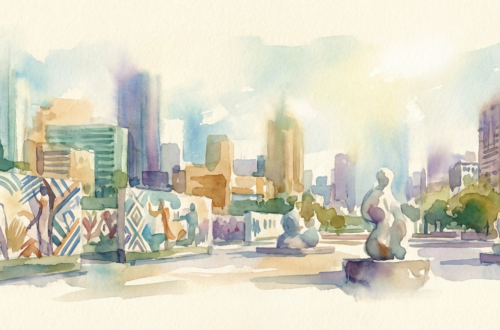
The Rhythm of Brushstrokes: How Abstract Expressionism Found Its Beat Picture Jackson Pollock in his studio, paint dripping from sticks and brushes in what appears to be chaotic abandon. Yet…

read more
7 March 2026
Blog

The LOL-apocalypse: When Memes Eat Complexity for Breakfast

I was doomscrolling the other day—a guilty pleasure I know we all share—when a meme stopped my thumb mid-flick. It was the classic Distracted Boyfriend format, but the labels were…

read more
1 July 2026
Blog

The Visual Language of Political Propaganda: A Cartoonist’s Guide

The Visual Language of Political Propaganda: A Cartoonist’s Guide Every morning, I sit down at my drawing board, coffee in hand, and confront the same delicious problem that’s haunted cartoonists…

read more
29 April 2026
  • Blog

    The Cartoonist’s New Deadline: How the Internet Redrew Political Satire

    22 August 2026 /

    Political cartooning was never a gentle art. It was a daily duel between ink and authority, a way of drawing the unsayable. But for most of its history, the duel had rules: a newspaper page, an editor’s nod, a printing press, a morning doorstep. The internet didn’t just move the duel online. It handed everyone a pen, removed the seconds, and set the duel in a town square where the crowd can throw fruit from any direction. The result is not simply faster cartoons or digital ink. It is a different civic practice—one where the drawn line argues in real time, often without a referee, and sometimes without a memory.…

    read more
    Keith Gonzales Comments Off on The Cartoonist’s New Deadline: How the Internet Redrew Political Satire

    You May Also Like

    The Hidden Conversations: How Lost Women Artists Speak Across Centuries

    5 March 2026

    The Legacy of Looking: How Great Collections Begin with Small Gestures

    8 March 2026

    The Death and Rebirth of Street Art: How Public Murals Conquered the Gallery

    5 March 2026
  • Blog

    The Ink Has Dried: How Political Cartooning Changed When the Internet Handed Everyone a Pen

    20 August 2026 /

    Political cartooning used to be a civic ritual with a fixed stage: the morning paper, the editorial page, a single panel that could make a senator choke on his coffee. The cartoonist was a kind of licensed jester—paid to be rude, but only within the frame. The internet didn’t just move that frame. It smashed it, multiplied it, and handed a pen to everyone in the room. The result isn’t the death of political cartooning. It’s something stranger: a form that has lost its gatekeepers and gained a mob. This matters to anyone who reads visual satire as a civic practice. The drawn line has always argued, exposed, and provoked.…

    read more
    Keith Gonzales Comments Off on The Ink Has Dried: How Political Cartooning Changed When the Internet Handed Everyone a Pen

    You May Also Like

    The Death and Rebirth of Street Art: How Public Murals Conquered the Gallery

    5 March 2026

    What Retrospective and legacy writing Reveals About Film festivals and independent cinema in 2026

    26 February 2026

    Independent art and the economics of making work — An Honest Critical

    21 February 2026
  • Blog

    The Craft of Visual Storytelling in Three Panels or Less

    20 August 2026 /

    Visual storytelling in three panels or less is the art of compressing a complete narrative arc—setup, tension, release—into a space smaller than a greeting card. It’s the editorial cartoonist’s native form, the meme-maker’s grammar, and the political satirist’s sharpest blade. Adjacent concepts include the single-panel gag, the comic strip, the ligne claire tradition, and the visual epigram. For readers of artoon.net, this isn’t a technical exercise. It’s a civic practice: how drawn lines argue, expose, and provoke in public discourse. A three-panel cartoon is a small machine for thinking. It asks the reader to complete the joke, to supply the missing beat, to recognize the absurdity the artist has framed…

    read more
    Keith Gonzales Comments Off on The Craft of Visual Storytelling in Three Panels or Less

    You May Also Like

    When Colors Sing and Sounds Paint: The Hidden Conversations Between Music and Visual Art

    7 March 2026

    The MoMA Basquiat Retrospective: When Institutional Validation Becomes a Mirror for Our Own Contradictions

    17 March 2026
    xslfvgwpzy

    Breaking New Ground: The Age of Artificial Intelligence in Creative Arts

    28 April 2025
  • Blog

    Why Children’s Cartoons Are More Radical Than Adult Animation

    17 August 2026 /

    Children’s cartoons are the last place where drawn lines still get to argue. Not argue in the polite, panel-discussion sense, but argue the way a good political cartoon argues: by exaggerating a truth until it becomes impossible to ignore. Adult animation, for all its blood spatter and existential monologues, has largely traded provocation for performance. Meanwhile, a show aimed at eight-year-olds will casually dismantle a surveillance state before the first commercial break. That’s the strange inversion at the heart of visual satire today: the work that looks most innocent is often doing the most radical civic work. On this blog, we usually examine how drawn lines function as public argument—how…

    read more
    Keith Gonzales Comments Off on Why Children’s Cartoons Are More Radical Than Adult Animation

    You May Also Like

    The Silent Conversations: How Portrait Paintings Whisper Their Secrets

    7 March 2026

    Kendrick Lamar’s Super Bowl LIX Halftime Show: The Art Statement the NFL Couldn’t Control

    14 March 2026

    Genshin Impact Five Years In: How HoYoverse Keeps Its Fantasy World Fresh

    5 March 2026
  • Blog

    Why Children’s Cartoons Are the Last Honest Political Cartoons

    14 August 2026 /

    There’s a moment in a 1990s Animaniacs episode where Yakko, Wakko, and Dot stand before a map of the world, rattling off nations in a breathless patter. It’s a geography lesson wrapped in chaos, but if you watch closely, the map is wrong. Not accidentally wrong—deliberately, satirically wrong. Borders shift. Countries vanish. The Warner siblings, those anarchic inkblots, aren’t just teaching names; they’re teaching that maps are stories, and stories are power. This is the quiet radicalism of children’s cartoons. While adult animation often congratulates itself on being edgy—think of the self-conscious cynicism of South Park or the nihilistic burp of Rick and Morty—shows for the very young are busy…

    read more
    Keith Gonzales Comments Off on Why Children’s Cartoons Are the Last Honest Political Cartoons

    You May Also Like

    When Colors Sing and Sounds Paint: The Hidden Conversations Between Music and Visual Art

    7 March 2026

    The Quiet Revolutionaries: Small Town Museums That Changed How We See Art

    8 March 2026

    The Secret Language of Color: What Masterpieces Reveal About How We See

    8 March 2026
  • Blog

    Why the Most Subversive Cartoons Are Rated G

    12 August 2026 /

    When people talk about cartoons that stick it to the man, they usually mean the adult stuff. You know the type: cynical protagonists, graphic violence, a thick veneer of irony. But the real troublemakers? They’re the ones wearing brightly colored backpacks and breaking into song. Children’s animation has quietly become the most effective vehicle for visual satire and civic commentary we have. It slips past the defenses we’ve built against overt political messaging, using fable, slapstick, and character design to ask questions that would get a live-action pundit laughed off the screen. This isn’t about sneaking a risqué joke past the censors for the parents in the room. It’s a…

    read more
    Keith Gonzales Comments Off on Why the Most Subversive Cartoons Are Rated G

    You May Also Like

    What Retrospective and legacy writing Reveals About Film festivals and independent cinema in 2026

    26 February 2026

    The Hidden Conversations: How Lost Women Artists Speak Across Centuries

    5 March 2026

    The Silent Conversations: How Portrait Paintings Whisper Their Secrets

    7 March 2026
 Older Posts
Newer Posts 

Recent Posts

  • The Half-Second Delay: Why the Best Cartoons Make You Laugh and Then Think
  • How Color Theory Shapes Emotional Response in Political Art
  • How Thumbnail Sketches Reveal What Cartoonists Actually Think Before They Polish
  • The Ethics of Drawing Historical Figures in Satire
  • Why Drawing Is Thinking: The Case for Visual Argument
Ashe Child Theme by Anonymous.