Artoong – Your Source for Artoong Content

Art, culture, and the conversations that matter.

  • Home
  • Reviews
  • Interviews
  • Features
  • Photography
  • Music
  • Home
  • Reviews
  • Interviews
  • Features
  • Photography
  • Music

No Widgets found in the Sidebar Alt!

Blog

The Woman in Pearls is Lying to You: How to Read the Hidden Stories in Portrait Paintings

Every Portrait Tells Two Stories Stand in front of Johannes Vermeer’s “Girl with a Pearl Earring” and you’re looking at a master class in strategic omission. That luminous pearl catches…

read more
12 March 2026
Blog

The Problem With AI Image Generators That Can’t Understand Visual Metaphor

Saul Steinberg’s 1976 New Yorker cover shows Manhattan from Ninth Avenue west. The city is dense, detailed, almost tactile. Then everything east of Ninth Avenue—most of the planet—collapses into a…

read more
9 July 2026
Blog

The New Economics of Independence: How Artists Navigate Between Survival and Creative Freedom

The Platform Paradox: When Access Doesn’t Equal Income The digital revolution promised artists unprecedented access to global audiences. Streaming platforms, social media, and online galleries have democratized distribution in ways…

read more
5 March 2026
  • Blog

    The Unspoken Rule of Three: Why Gags Die on the Fourth Panel and Arguments Are Born

    24 July 2026 /

    Draw a politician promising something in panel one. Draw him breaking that promise in panel two. Draw the consequence in panel three. You have a gag. It works. The reader laughs—or at least nods—and moves on. Now add a fourth panel where the politician explains why the promise was never realistic. Watch the gag collapse. The reader stops laughing. The politician has been allowed to speak too long. The cartoonist has mistaken escalation for explanation. This is the unspoken rule of three. Most cartoonists learn it by accident. They feel it before they can name it. Three panels establish, escalate, and twist. Four panels establish, escalate, twist, and then—fatally—resolve. Resolution…

    read more
    Keith Gonzales Comments Off on The Unspoken Rule of Three: Why Gags Die on the Fourth Panel and Arguments Are Born

    You May Also Like

    Artoong

    22 February 2026

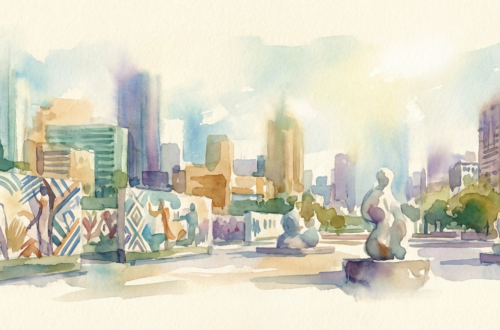
    The Death and Rebirth of Street Art: How Public Murals Conquered the Gallery

    5 March 2026
    tenfbsvjuz

    Breaking the Chains: The Revolutionary Potential of Blockchain

    16 May 2025
  • Blog

    Why Children’s Cartoons Are More Radical Than Adult Animation

    23 July 2026 /

    When you think of radical art, you probably picture underground zines, avant-garde films, or protest murals. But the most quietly subversive visual storytelling of the last three decades has been hiding in plain sight, tucked between cereal ads and toy tie-ins. Children’s cartoons—especially the serialized, creator-driven wave that kicked off in the 2010s—have built a sneaky canon of work that questions authority, unpacks identity, and pokes holes in power structures, all while sailing through network standards. Meanwhile, adult animation often leans on cynicism, shock laughs, and a kind of nihilistic comfort food. The irony is sharp: the shows made for kids are the ones actually asking kids to think. This…

    read more
    Keith Gonzales Comments Off on Why Children’s Cartoons Are More Radical Than Adult Animation

    You May Also Like

    tenfbsvjuz

    Breaking the Chains: The Revolutionary Potential of Blockchain

    16 May 2025

    Why We’re Reading Religious Art All Wrong: The Rebellion Hidden in Sacred Symbols

    7 March 2026

    Independent art and the economics of making work — An Honest Critical

    21 February 2026
  • Blog

    Why Children’s Cartoons Are More Radical Than Adult Animation

    18 July 2026 /

    By Marco Bellini Mention radical animation and most people picture late-night Adult Swim fever dreams or those arthouse features playing to empty cinemas. But the real subversives? They wear primary colors and clock in at eleven minutes. Children’s cartoons—long dismissed as sugar-coated commerce—have quietly become the most potent delivery system for social commentary, emotional intelligence, and formal experimentation in the moving image. This isn’t about hidden adult jokes slipped past the censors. It’s about a structural advantage: kids’ shows are allowed to be sincere, surreal, and didactic without apology. Adult animation, shackled by irony and a need to prove its maturity through cynicism, often ends up saying far less. In…

    read more
    Keith Gonzales Comments Off on Why Children’s Cartoons Are More Radical Than Adult Animation

    You May Also Like

    The Silent Conversations: How Portrait Paintings Whisper Their Secrets

    7 March 2026

    Genshin Impact Five Years In: How HoYoverse Keeps Its Fantasy World Fresh

    5 March 2026

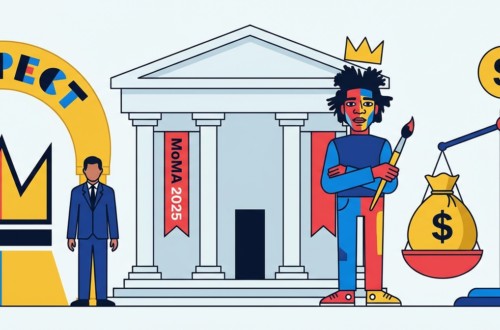
    MoMA’s Basquiat Retrospective: Institutional Validation or Decades-Late Recognition?

    14 March 2026
  • Blog

    How to Draw Anger Without Becoming Angry

    16 July 2026 /

    Anger is a peculiar beast in the cartoonist’s menagerie. It’s the emotion that sells newspapers, fuels political caricature, and gives a protest sign its bite. Yet for the artist, drawing rage—the furrowed brows, the clenched teeth, the veins popping like overstuffed sausages—can be a strangely serene act. The central paradox of visual satire is that to depict fury with precision, you must approach it with the calm of a bomb-disposal expert. This isn’t about suppressing feeling; it’s about understanding the mechanics of anger so you can replicate it on the page without letting it replicate inside you. For the civic-minded cartoonist, this skill is not just a craft technique. It’s…

    read more
    Keith Gonzales Comments Off on How to Draw Anger Without Becoming Angry

    You May Also Like

    Kendrick Lamar’s Super Bowl LIX Halftime Show: The Art Statement the NFL Couldn’t Control

    14 March 2026

    MoMA’s Basquiat Retrospective: Institutional Validation or Decades-Late Recognition?

    14 March 2026
    qjognxkmkt

    Quantum Computing: The New Frontier of Innovation

    23 May 2025
  • Blog

    Drawing Fury, Staying Sane: A Cartoonist’s Guide to Anger Without the Burnout

    13 July 2026 /

    Anger is the easiest emotion to draw and the hardest to live with. A few jagged lines, a furrowed brow, steam shooting from the ears—rage practically sketches itself. But for the cartoonist who works in visual satire, anger is a trap. It can sharpen your line and blunt your judgment in the same stroke. I’ve spent decades in this studio, ink-stained and occasionally irate, learning that the real craft isn’t just about rendering fury on the page. It’s about channeling it without letting it consume you. This isn’t a guide to anger management in the therapeutic sense. It’s a technical and philosophical manual for the civic-minded cartoonist. We’ll explore how…

    read more
    Keith Gonzales Comments Off on Drawing Fury, Staying Sane: A Cartoonist’s Guide to Anger Without the Burnout

    You May Also Like

    The MoMA Basquiat Retrospective: When Institutional Validation Becomes a Mirror for Our Own Contradictions

    17 March 2026

    The Quiet Revolutionaries: Small Town Museums That Changed How We See Art

    8 March 2026

    The Legacy of Looking: How Great Collections Begin with Small Gestures

    8 March 2026
  • Blog

    The Problem With AI-Generated Satire That Has No Point of View

    10 July 2026 /

    I fed the same prompt to Midjourney and to a working editorial cartoonist: a politician juggling skulls while smiling for a camera. Midjourney gave me something technically impressive. Four arms, good lighting, a clean gradient sky behind a figure whose face was just specific enough to read as generic strongman but not specific enough to read as anyone you’d recognize. The skulls were rendered beautifully. The composition followed the rule of thirds. It looked like a poster for a film that would go straight to streaming. The cartoonist gave me something else. She drew a senator I’ve seen on television—recognizable from the jaw, the hairline, the way his suit collar…

    read more
    Keith Gonzales Comments Off on The Problem With AI-Generated Satire That Has No Point of View

    You May Also Like

    qjognxkmkt

    Quantum Computing: The New Frontier of Innovation

    23 May 2025

    MoMA’s Basquiat Retrospective: Institutional Validation or Decades-Late Recognition?

    14 March 2026

    The Secret Language of Color: What Masterpieces Reveal About How We See

    8 March 2026
 Older Posts
Newer Posts 

Recent Posts

  • The Caption Is the Last Thing You Draw: Why AI Can Write Your Pitch but Not Your Punchline
  • The Half-Second Delay: Why the Best Cartoons Make You Laugh and Then Think
  • How Color Theory Shapes Emotional Response in Political Art
  • How Thumbnail Sketches Reveal What Cartoonists Actually Think Before They Polish
  • The Ethics of Drawing Historical Figures in Satire
Ashe Child Theme by Anonymous.