The Ink Has Dried: How Political Cartooning Changed When the Internet Handed Everyone a Pen
Political cartooning used to be a civic ritual with a fixed stage: the morning paper, the editorial page, a single panel that could make a senator choke on his coffee. The cartoonist was a kind of licensed jester—paid to be rude, but only within the frame. The internet didn’t just move that frame. It smashed it, multiplied it, and handed a pen to everyone in the room. The result isn’t the death of political cartooning. It’s something stranger: a form that has lost its gatekeepers and gained a mob.
This matters to anyone who reads visual satire as a civic practice. The drawn line has always argued, exposed, and provoked. But the conditions of that argument have shifted. Speed, scale, and the collapse of editorial distance have changed what a cartoon can do—and what it can get away with. The old cartoonist drew for a city. The new one draws for a planet, and the planet talks back before the ink is dry.
The Editorial Page Was a Slow, Deliberate Machine
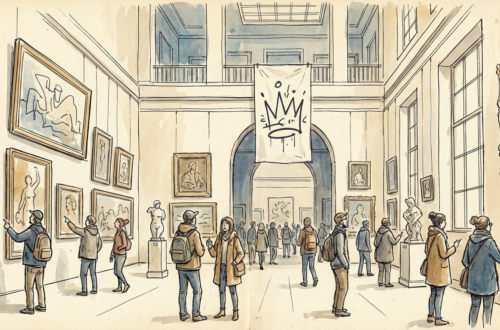
Before the internet, a political cartoon traveled through a pipeline. An editor commissioned it. A layout artist placed it. A printing press stamped it onto paper. By the time a reader saw it, the cartoon had been filtered through several layers of judgment. That pipeline was slow, but it created a shared context. A cartoon about a mayor’s scandal ran in the same paper that covered the scandal. The reader already knew the setup. The cartoonist only had to deliver the punchline.
That shared context was the cartoonist’s real medium. The drawing was just the delivery system. When the internet dissolved the local paper’s monopoly on attention, it also dissolved the assumption that everyone in the room had read the same news. A cartoonist now draws for an audience that may not know the event, the politician, or the reference. The setup has to be built into the image itself. That’s a different kind of drawing—more explanatory, less elliptical.
The Gatekeeper Was Also a Buffer
Editors weren’t just filters. They were buffers. A cartoonist could draw something sharp, and the editor absorbed some of the blowback. The paper’s legal department stood somewhere in the background. The internet removed that buffer. A cartoonist who posts directly to social media is the artist, the editor, the publisher, and the customer service department. The angry replies arrive in the same feed as the work. That changes the psychology of the line. You draw differently when you know the mob is already typing.
Speed Changed the Joke’s Half-Life
A newspaper cartoon had a shelf life of about one day. It was read over coffee, laughed at or argued with, and then used to wrap fish. The internet gave the cartoon a much longer half-life—and a much shorter attention span. A cartoon can go viral in an hour and be forgotten by dinner. Or it can resurface years later, stripped of its context, and be read as evidence of something the cartoonist never intended.
This is the paradox of internet-era cartooning: the work is more ephemeral and more permanent at the same time. The old cartoonist worried about tomorrow’s deadline. The new one worries about a screenshot that will outlive the joke.
The Meme Is a Cartoon Without a Signature
The internet’s native form of visual satire is the meme. A meme is a political cartoon with the authorship sanded off. It travels without a byline, mutates as it spreads, and belongs to everyone and no one. The professional cartoonist now competes with an army of anonymous image-makers who can respond to a news event in minutes. Some of those memes are brilliant. Most are not. But they have one advantage the professional lacks: they don’t have to be accountable.
A signed cartoon is a statement. A meme is a shrug. The difference matters. When a cartoonist signs a drawing, they’re saying: I drew this, I mean it, and I’ll stand behind it. The internet has made that stance rarer and more valuable. It has also made it more dangerous.
The Audience Is Now Part of the Panel
In the old model, the reader’s response was private. You laughed, or you didn’t. You wrote a letter to the editor, and maybe it got printed three days later. The internet made the response public, immediate, and often brutal. A cartoonist now publishes into a room where the audience is already arguing. The cartoon isn’t the start of the conversation. It’s a comment in a thread that has been running for years.
That changes the cartoonist’s role. The old cartoonist was a soloist. The new one is a participant in a shouting match. Some cartoonists have adapted by drawing directly to the outrage—making work that’s designed to be screenshotted and shared as ammunition. Others have pulled back, drawing quieter work that rewards the reader who slows down. Both strategies are responses to the same condition: the audience is no longer a receiver. It’s a co-author.
The Quote-Tweet Is the New Letters Page
The letters page was a slow, curated space. The quote-tweet is its feral descendant. A cartoon can be praised, condemned, misread, and recontextualized within minutes of posting. The cartoonist watches this happen in real time. That’s a new kind of pressure. The old cartoonist had a day to recover from a bad drawing. The new one has about ninety seconds before the first dunks arrive.
What Has Not Changed
For all the disruption, the core of political cartooning remains intact. A good cartoon still works by compression. It takes a complicated situation and reduces it to a single image that makes the reader see it fresh. The tools have changed—digital tablets, social media, infinite canvas—but the discipline is the same. You have to know what to leave out. The internet hasn’t changed that. It has only made the leaving-out harder, because there’s always someone ready to fill the gap with their own interpretation.
The best internet-era cartoonists understand this. They draw for the screenshot, but they also draw for the slow reader. They know the meme will outrun them, so they make work that’s harder to reduce. They use the internet’s speed without surrendering to it. That’s a difficult balance, and it’s the defining challenge of the form right now.

The New Gatekeepers Are Algorithms
The old gatekeepers were human editors with taste, bias, and a fear of lawsuits. The new gatekeepers are algorithms with none of those qualities. A cartoon that would have been killed by an editor for being too obscure can now find a niche audience through a recommendation engine. A cartoon that would have been printed without a second thought can be flagged, shadow-banned, or buried by a platform’s moderation system. The algorithm isn’t a censor in the old sense. It’s something more diffuse: a set of incentives that shapes what gets seen and what disappears.
Cartoonists now draw with one eye on the platform. That’s not always a bad thing. Some have found audiences they never would have reached through a local paper. But it’s a different kind of constraint. The old cartoonist answered to an editor. The new one answers to a feed.
The Platform Is Not Neutral
Every platform has a bias. Twitter rewards the quick jab. Instagram rewards the polished image. Substack rewards the loyal subscriber. A cartoonist who wants to survive online has to choose which bias to work with. That choice shapes the work. A cartoon drawn for Instagram isn’t the same as a cartoon drawn for a newspaper. The frame is different, the pacing is different, and the relationship with the audience is different. The internet didn’t just change where cartoons appear. It changed what they are.
The Cartoonist as Archivist
One of the quiet changes of the internet era is that the cartoonist is now also an archivist. The old cartoonist drew for the day and moved on. The new one builds a body of work that lives online, searchable and permanent. That creates a new kind of accountability. A cartoonist’s entire output is available to anyone who wants to find a contradiction, a pattern, or a grudge. That’s not necessarily a bad thing. It forces a kind of consistency that the old daily deadline never demanded.
It also creates a new kind of reader. The person who discovers a cartoonist through a viral post can scroll back through years of work in an afternoon. They don’t read the cartoon in the context of the day it was drawn. They read it as part of a larger argument. That’s a different way of encountering visual satire. It’s closer to reading a collected volume than a daily paper. The cartoonist who understands this draws with the archive in mind.
The Economics of the Line
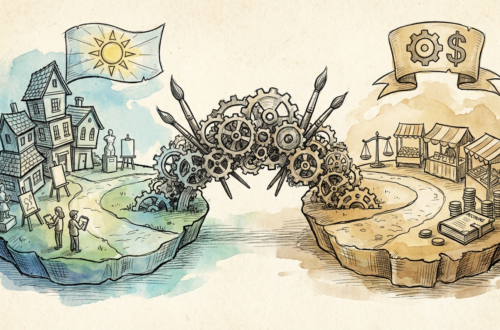
The old cartoonist had a salary and a staff job. The new one has a Patreon, a newsletter, and a side hustle selling prints. The internet dismantled the economic model of political cartooning before it built a replacement. Some cartoonists have found a way to make it work. Many have not. The result is a field that’s more open and more precarious at the same time. Anyone can start. Few can sustain.
That economic pressure shapes the work. A cartoonist who depends on subscriptions draws for the subscribers. A cartoonist who depends on viral reach draws for the algorithm. Neither is the old model of drawing for the city. The audience is now a market, and the cartoonist is a small business. That’s not a tragedy. It’s just a fact. The form has always been shaped by its economics. The internet changed the economics, so it changed the form.
The Subscription Is the New Newsstand
The newsstand was a physical place where a reader encountered a cartoon by accident. The subscription is a digital place where a reader encounters a cartoon by choice. That’s a meaningful difference. The old cartoonist could count on a certain number of accidental readers. The new one has to earn every reader. That’s harder, but it also creates a stronger bond. A subscriber isn’t a passerby. A subscriber is a reader who has decided the cartoonist is worth paying for. That’s a different kind of relationship, and it shows in the work.
What the Internet Gave Back
It’s easy to sound elegiac about the old days. But the internet gave political cartooning some genuine gifts. It lowered the barrier to entry. A young cartoonist no longer needs to impress a syndicate or land a staff job. She can start drawing today, post it tonight, and find an audience by morning. That’s a real democratization. The old gatekeepers are gone, and while that has costs, it also has benefits. The field is more diverse, more global, and more experimental than it was thirty years ago.
The internet also gave cartoonists a direct line to their readers. The old cartoonist worked in isolation and heard from readers only through the letters page. The new one can ask a question, test a joke, and get a response in minutes. That’s a different kind of practice. It’s more collaborative, more iterative, and more exposed. Some cartoonists thrive on it. Others find it exhausting. But it’s the condition of the work now, and it’s not going away.
The Punchline That Makes You Think
Here’s the wry part. The internet was supposed to kill political cartooning. Instead, it turned everyone into a political cartoonist. The person who posts a meme about a city council vote is doing what Thomas Nast did in the 1870s. The person who draws a crude stick figure of a prime minister and shares it with three friends is part of the same tradition. The tools are different, the distribution is different, and the quality is wildly uneven. But the impulse is the same: to use a drawn line to make a point about power.
The professional cartoonist is no longer the only one in the room. That’s humbling. It’s also clarifying. What the professional offers isn’t the ability to draw a line. It’s the ability to draw the right line—the one that compresses a week of news into a single image that makes you laugh and then makes you think. The internet has made that skill rarer, not more common. It has also made it more necessary. In a feed full of noise, a well-drawn panel still stops the scroll. That’s the old magic, and it hasn’t gone anywhere.

Frequently Asked Questions
Has the internet made political cartooning more or less influential?
Both, in different ways. A single cartoon can now reach millions of people in hours, which was impossible in the print era. But that reach is fragmented. The old cartoonist spoke to a city that shared a newspaper. The new one speaks to a scattered audience that may not share any context. Influence is now measured in shares and screenshots rather than in a senator’s morning coffee. The reach is bigger; the depth is often shallower.
Why do so many internet-era political cartoons look like memes?
Because the meme is the internet’s native visual language. It’s fast, remixable, and designed to travel without explanation. Professional cartoonists have absorbed some of that language, partly to compete and partly because it’s genuinely useful. A cartoon that borrows the visual grammar of a meme can spread more easily. The risk is that it becomes just another meme—disposable, anonymous, and stripped of the cartoonist’s signature. The best work borrows the speed without losing the point of view.
Do political cartoonists still need editors?
Yes, but not in the old sense. The old editor was a gatekeeper who decided what got printed. The new editor is more like a collaborator or a sounding board. Some cartoonists work with editors at digital publications. Others rely on trusted readers, fellow cartoonists, or their own judgment. The buffer function of the old editor is largely gone, and nothing has fully replaced it. That’s one reason the internet era feels so raw. The cartoonist is more exposed than ever.
What makes a political cartoon work online?
The same thing that made it work in print: compression. A good cartoon reduces a complicated situation to a single image that makes the reader see it fresh. Online, that image also has to survive being seen at thumbnail size, out of context, and in a feed full of distractions. That means the drawing has to be bolder, the idea has to be clearer, and the punchline has to land without a setup. It’s a harder brief, not an easier one.
The Next Panel
The internet didn’t end political cartooning. It ended the cartoonist’s monopoly on the drawn argument. That’s a loss and a gain. The loss is the shared context, the editorial buffer, and the slow, deliberate machine of the daily paper. The gain is a wider field, a direct line to readers, and a form that’s being reinvented in real time. The cartoonist who understands both sides of that trade-off is the one who will still be drawing when the feed moves on to the next outrage.
This is the first in a recurring series on how visual satire works as a civic practice. The next panel will look at the ethics of caricature—where the line between critique and cruelty actually sits, and who gets to draw it. If you have a question about the craft or the politics of the drawn line, send it in. The best questions become the next cartoon.