-
The Vermeer Hidden in a Former Hardware Store: Why Small Town Museums Hold Art’s Best Kept Secrets
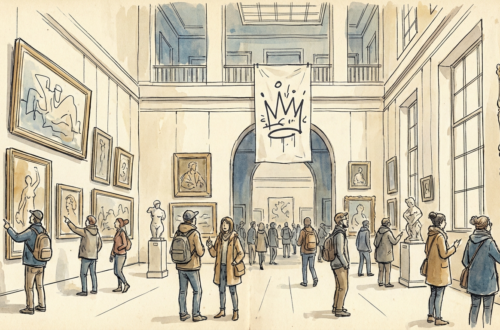
The Painting That Stopped Traffic on Main Street Last summer, I walked into the Fenimore Art Museum in Cooperstown, New York, expecting the usual small-town collection of local landscapes and donated family portraits. Instead, I found myself face-to-face with a genuine Thomas Cole painting from 1836, hanging quietly next to a window overlooking Otsego Lake. The irony wasn’t lost on me: here was one of America’s most celebrated Hudson River School painters, displayed in a space where his actual contemporaries might have walked past that very lake view. This moment made clear something I’d been noticing for years during road trips across America. While tourists flock to the Met and…
-
The Six Brushes That Changed How I See Water (And Why Your First Watercolor Kit Matters More Than You Think)
I watched my student Sarah stare at her muddy brown sky for a full thirty seconds before she looked up and asked, “Why does everything I paint turn into chocolate milk?” She’d been fighting with a stiff, synthetic brush from a discount set, trying to lay down a wash with all the grace of scrubbing a bathtub. The moment I handed her a proper round brush loaded with natural hair, her whole relationship with the paint transformed. Suddenly water moved like water, pigment settled where she wanted it, and that sky bloomed into the soft lavender she’d been chasing. This moment happens in every watercolor class I teach. Your tools…
-
The Legacy of Looking: How Great Collections Begin with Small Gestures
The First Print That Changed Everything There’s something profoundly moving about visiting the homes of serious collectors after they’ve passed, when their carefully curated walls tell the story of a lifetime spent truly seeing. I think of Margaret Chen, whose Chinatown apartment I visited last spring during her estate sale. She had begun with a single $15 lithograph of a sparrow, purchased from a street vendor in 1967. By the time she died at ninety-three, that sparrow hung surrounded by works spanning six decades. Each piece was chosen not for its market value, but for the conversation it sparked with its neighbors. The Legacy of Looking: How Great Collections Begin…
-
Why Monet’s Haystacks Made Me Finally Understand What My Painting Teacher Meant About Color Temperature
Standing in Front of the Magic Hour I’m standing three feet from Monet’s “Grainstacks (End of Summer)” at the Art Institute of Chicago, and something clicks. The haystack itself appears almost purple in the late afternoon light, but look closer and you’ll see streaks of orange, yellow, and even blue woven throughout. My old painting instructor used to tap the canvas and say “warm shadows, cool lights” until I wanted to scream, but here it is, proven in oil paint from 1891. This particular haystack painting shows what color theorists call simultaneous contrast. The warm golden light hitting the stack makes the shadowed areas appear cooler by comparison, even though…
-
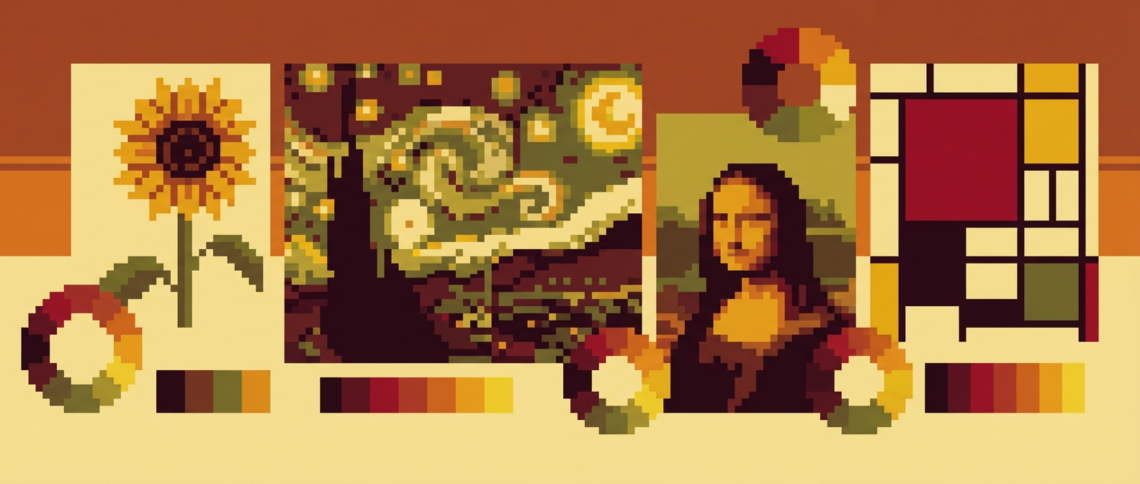
The Secret Language of Color: What Masterpieces Reveal About How We See
Standing Before the Blues That Changed Everything I’m watching a woman lean closer to Picasso’s “The Old Guitarist” at the Art Institute of Chicago, her breath fogging the protective glass slightly before she catches herself and steps back. She’s experiencing what happens when you encounter true chromatic genius in person. The way Picasso’s monochromatic blue palette doesn’t just represent sadness, but actually creates a physical sensation of melancholy in your chest. This is color theory in action. Not as academic exercise but as living, breathing emotional architecture. The Secret Language of Color: What Masterpieces Reveal About How We See The Blue Period paintings show what happens when an artist strips…
-
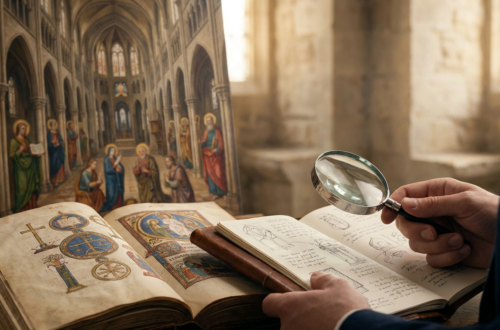
The Quiet Revolutionaries: Small Town Museums That Changed How We See Art
The Cathedral Light of Forgotten Spaces There’s something profound about discovering a masterpiece in a place where nobody expects to find one. I’m thinking of the Fenimore Art Museum in Cooperstown, New York, where James Fenimore Cooper’s literary legacy shares space with one of America’s most important collections of Native American art. Walking into their main gallery feels like stepping into a cathedral, not because of grand architecture, but because of how deliberately the light falls across George Catlin’s portraits of Plains Indian chiefs. The curator understood something essential: these paintings weren’t ethnographic specimens but portraits of individuals, each face catching light the way Rembrandt’s subjects do, each brushstroke carrying…