The Festival Circuit’s Identity Crisis: How Independent Cinema Lost Its Way in 2026
When Everyone’s Independent, No One Is
The numbers tell a story that should alarm anyone who cares about the future of cinema. When the Sundance Film Festival announces it received more than seventeen thousand submissions for its 2026 edition, the instinct might be to celebrate this explosion of creative output. Instead, we should be asking what this flood actually represents. The answer is uncomfortable: a marketplace so oversaturated that “independent” cinema has lost all meaning.
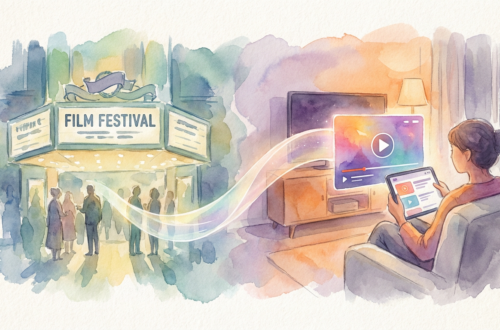
The festival circuit once worked as a filter, separating genuine artistic vision from commercial calculation. Today, it operates more like a feeding frenzy where streaming platforms circle overhead, ready to snap up content before audiences have even seen it. The practice of offering distribution deals on opening day of festival screenings has turned these supposed celebrations of cinema into glorified trade shows. The art has become secondary to the acquisition.
This shift reveals a fundamental misunderstanding of what made independent cinema valuable in the first place. Independence wasn’t just about budget constraints or studio involvement. It was about creative freedom, about stories that couldn’t exist within the commercial system. When every major studio now operates its own “indie” division, copying the A24 model of prestige filmmaking, we’re watching the corporatization of rebellion itself.
The Streaming Mirage and Its Casualties
The documentary boom happening right now shows exactly how streaming demand has warped artistic priorities. Yes, more documentaries are being made and distributed than ever before. But quantity doesn’t equal quality, and the commercial success of the format has led to a sameness that would have been unthinkable a decade ago. Every documentary now seems designed for binge-watching, structured around cliffhangers and revelations rather than sustained inquiry or contemplation.
The streaming platforms’ hunger for content has created a false economy where filmmakers chase algorithms instead of audiences. The festival circuit, once a place where films could find their natural audience through word-of-mouth and critical discovery, now works primarily as a showcase for pre-sold content. Programmers increasingly select films not based on artistic merit but on their perceived “streamability.” The result is festivals that feel more like product launches than cultural events.
This dynamic particularly damages emerging filmmakers who lack the resources or connections to navigate the new landscape. While established directors can leverage their reputations into streaming deals, newcomers find themselves competing not just against peers but against an entire entertainment industrial complex that has learned to simulate independence while maintaining corporate control.
The Global Cinema Paradox
The success of films like “Parasite” at the Academy Awards created what seemed like a promising opening for international cinema in English-language markets. Festival programmers and distributors began actively seeking foreign films, and audiences showed increased willingness to engage with subtitled content. On the surface, this appears to be pure good news, expanding the range of voices and perspectives available to viewers.
But this development has its own troubling implications. The increased attention to international cinema often comes with unspoken expectations about what types of foreign films will find success. There’s a growing tendency to favor works that confirm Western audiences’ preconceptions about other cultures rather than those that challenge or complicate them. The festival circuit risks becoming a form of cultural tourism, where international films are valued more for their exotic appeal than their artistic merit.
Moreover, the rush to acquire international content has created a new form of cultural imperialism. Streaming platforms swoop into festivals, purchasing films from developing film industries and then determining how and where they’ll be seen. Local contexts and intended audiences become secondary to global distribution strategies. The democratizing potential of increased international presence gets undermined by the same commercial forces reshaping domestic independent cinema.
The Death of Apprenticeship
Perhaps the most concerning trend affecting independent cinema is the declining enrollment in traditional film schools as aspiring creators increasingly turn to platforms like YouTube and TikTok as alternative paths into the industry. While these platforms democratize access to filmmaking tools and audiences, they also fundamentally alter what we consider cinema to be.
The craft-based approach to filmmaking, where technical skills are developed through years of study and practice, is giving way to a more immediate, content-focused model. This isn’t necessarily bad, but it does represent a significant shift in how stories are conceived and told. The festival circuit, designed to showcase feature-length narratives with traditional three-act structures, increasingly feels disconnected from how emerging creators actually work.
The irony is that while film festivals claim to support independent voices, they remain wedded to an increasingly outdated model of what independent filmmaking looks like. The real innovation is happening on platforms that don’t require festival validation, creating a parallel universe of content creation that operates according to entirely different rules. As IndieWire film criticism has noted, this split threatens to leave festivals as museums of a particular type of filmmaking rather than laboratories for its future.
Reclaiming Independence
The path forward requires acknowledging that the current festival system doesn’t work particularly well for artists or audiences. True independence in 2026 might mean rejecting the festival circuit entirely, finding ways to connect directly with viewers without the mediation of increasingly commercialized institutions. This doesn’t mean abandoning quality or craftsmanship, but rather finding new forms of distribution and exhibition that prioritize artistic vision over market considerations.
The challenge lies in distinguishing between genuine innovation and mere disruption. Not every change is progress, and the wholesale abandonment of traditional filmmaking approaches risks throwing away valuable accumulated knowledge. The goal should be to preserve what’s worth keeping while remaining open to new possibilities that the current system can’t accommodate.
The conversation about independent cinema’s future can’t be limited to industry insiders and festival programmers. It needs broader participation from audiences, critics, and creators who recognize that what’s at stake isn’t just the health of a particular sector of filmmaking, but the continued existence of cinema as an art form capable of challenging, surprising, and transforming us. What role will you play in shaping that future?