The Woman in Pearls is Lying to You: How to Read the Hidden Stories in Portrait Paintings
Every Portrait Tells Two Stories
Stand in front of Johannes Vermeer’s “Girl with a Pearl Earring” and you’re looking at a master class in strategic omission. That luminous pearl catches your eye first, but notice what’s missing. No wedding ring. No elaborate dress. No family crest or religious symbols that would typically anchor a 17th-century portrait in social reality. Vermeer painted a mystery, not a person, and that choice tells us everything about who held power in his world and what stories were worth preserving.
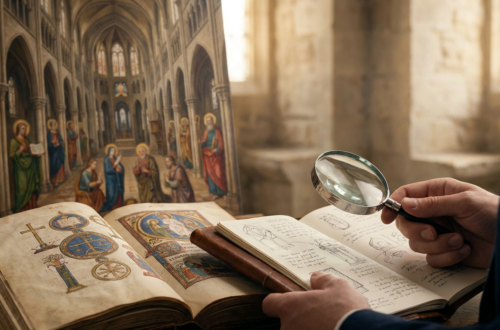
Portrait paintings work like visual résumés crossed with personal advertisements, but they’re written in a language most of us never learned to read fluently. Every element from the subject’s pose to the objects scattered in the background carries meaning as deliberate as the words in a carefully crafted speech. The trick is knowing where to look and what questions to ask.
Decode the Costume Drama
Clothing in portraits operates as a complex signaling system that makes modern fashion statements look subtle by comparison. When Hans Holbein painted Henry VIII in that famous wide-legged stance, the king’s codpiece wasn’t just anatomical bragging. The gold-threaded doublet, the fur-lined sleeves, the jeweled cap, each piece announced Henry’s wealth, virility, and divine right to rule. The portrait cost more than most people earned in several lifetimes, and everyone who saw it was meant to understand that power dynamic immediately.
Look for fabric textures that seem almost touchable. Painters like Jan van Eyck spent weeks perfecting the way light bounced off silk versus velvet versus ermine fur because these details weren’t decorative flourishes. They were proof of access to luxury goods, often imported from distant lands. A merchant’s wife painted in Chinese silk announced her husband’s successful trade connections just as clearly as a LinkedIn profile highlights professional networks today.
Color choices carried political and religious weight too. Ultramarine blue, made from ground lapis lazuli, cost more than gold and was typically reserved for painting the Virgin Mary’s robes. When you see it used for a secular portrait subject’s clothing, you’re witnessing someone making a statement about their wealth and possibly their piety. Red often signified power and nobility, but the specific shade mattered. Cardinals wore scarlet as a symbol of their willingness to shed blood for the Church, while English nobles preferred a deeper crimson that wouldn’t compete with royal purple.
Reading the Room: Objects as Biography
The objects surrounding portrait subjects work like carefully curated social media posts, designed to project specific aspects of identity. In Giovanni Arnolfini’s double portrait by van Eyck, that single lit candle in the ornate chandelier isn’t atmospheric lighting. It represents the presence of the divine in their marriage ceremony, while the little dog at their feet symbolizes fidelity and loyalty. The oranges on the windowsill weren’t a casual snack but expensive imports that announced the couple’s international business connections.
Books always deserve close attention in portraits. An open book might show specific text that reveals the subject’s education, religious beliefs, or political affiliations. A closed book with visible clasps suggests precious, possibly forbidden knowledge. Musical instruments indicated refinement and education, but the type mattered enormously. A lute suggested courtly accomplishments, while a violin might indicate professional musical ability, which carried different social implications.
Even the architectural elements tell stories. Those marble columns flanking many Renaissance portraits weren’t just classical references. They suggested permanence, stability, and connection to ancient Roman power structures. Windows opening onto detailed landscapes claimed ownership of specific territories, while interior settings could indicate whether someone lived in a palace, a merchant’s house, or a scholar’s study.
Body Language Across Centuries
Portrait poses follow strict social choreography that varied dramatically across different periods and cultures. The formal frontal pose popular in Byzantine and early medieval portraits emphasized the subject’s spiritual authority and connection to divine power. As Renaissance humanism took hold, three-quarter views became fashionable because they suggested psychological depth and individual personality while maintaining appropriate dignity.
Hand positions carried specific meanings that portrait commissioners understood instinctively. Hands resting gently on a prayer book indicated piety. Hands positioned to display rings announced marital status, family alliances, or ecclesiastical rank. Artists like Anthony van Dyck became famous for painting aristocratic hands with an almost supernatural elegance, their long fingers positioned to suggest both refinement and gentle authority.
Eye contact, or the deliberate avoidance of it, communicated power dynamics between the subject and viewers. Direct gaze suggested confidence and authority, inviting viewers into a relationship of equals. Subjects looking slightly away or upward often indicated humility, spirituality, or deference to higher powers. The famous enigmatic expression of the Mona Lisa works precisely because it seems to shift between these different modes of engagement, keeping viewers perpetually uncertain about their relationship to this painted woman.
The Stories They Couldn’t Tell
Perhaps the most fascinating aspect of portrait reading involves recognizing what’s deliberately absent or carefully disguised. Court painters became masters of flattery through omission, smoothing away age spots, minimizing physical disabilities, or adjusting proportions to match contemporary beauty standards. They painted aspirational versions of their subjects, showing them as they wished to be remembered rather than as they necessarily appeared.
Political tensions often hide in plain sight within portrait compositions. During periods of religious upheaval, artists developed subtle visual codes to indicate their subjects’ true beliefs without triggering persecution. A seemingly innocent flower arrangement might include plants with specific symbolic associations, or jewelry might incorporate hidden religious symbols that only initiated viewers could recognize and interpret.
The most powerful portraits often succeed by suggesting stories they don’t explicitly tell. They invite viewers to imagine the conversations happening just outside the frame, the relationships that shaped these painted personalities, the hopes and fears that motivated someone to commission their image for posterity. Next time you encounter a portrait, try reading it like a detective story where every visual clue has been placed with careful intention. What secrets might be hiding behind that composed expression or elaborate costume? The answers often reveal as much about the world that created these images as they do about the individuals they claim to represent.