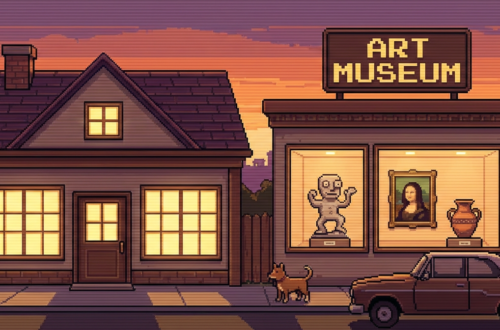
The Vermeer Hidden in a Former Hardware Store: Why Small Town Museums Hold Art’s Best Kept Secrets
The Painting That Stopped Traffic on Main Street
Last summer, I walked into the Fenimore Art Museum in Cooperstown, New York, expecting the usual small-town collection of local landscapes and donated family portraits. Instead, I found myself face-to-face with a genuine Thomas Cole painting from 1836, hanging quietly next to a window overlooking Otsego Lake. The irony wasn’t lost on me: here was one of America’s most celebrated Hudson River School painters, displayed in a space where his actual contemporaries might have walked past that very lake view.
This moment made clear something I’d been noticing for years during road trips across America. While tourists flock to the Met and MOMA, some of the most extraordinary art experiences are happening in converted Victorian mansions, repurposed train stations, and yes, former hardware stores. These small institutions often house collections that would make major museums weep with envy, yet they remain delightfully uncrowded and refreshingly intimate.
When Millionaires Went Home: The Secret History of Small Museum Collections
The backstory of how masterpieces ended up in places like Williamstown, Massachusetts or New Britain, Connecticut reads like a fascinating chapter in American social history. In the early 20th century, wealthy industrialists and railroad barons didn’t just collect art as status symbols. They genuinely believed great art should be accessible to their communities, not locked away in private estates.
Take the Clark Art Institute in Williamstown, where Sterling Clark’s collection includes thirty-nine Renoirs. Clark specifically chose this Berkshire mountain town over New York City because he wanted to create an intimate viewing experience. Walking through those galleries feels like browsing a sophisticated friend’s living room, where you can stand inches away from Toulouse-Lautrec’s “Jane Avril” without crowds or velvet ropes creating distance.
The New Britain Museum of American Art tells a similar story. Hardware fortune heir Alix Stanley gifted the museum an astounding collection including works by John Singer Sargent and Childe Hassam. These aren’t museum-quality reproductions or lesser works by famous artists. These are paintings that anchor entire wings in major institutions, displayed in a space where you might be the only visitor in the gallery.
The Art of Discovery: What You’ll Actually Find
Small town museums excel at showcasing artists who deserve broader recognition but haven’t achieved household-name status. The Brandywine River Museum in Chadds Ford, Pennsylvania, houses the world’s most comprehensive collection of Wyeth family paintings. Here, you can trace three generations of artistic evolution from N.C. Wyeth’s golden age illustrations through Andrew Wyeth’s haunting realism to Jamie Wyeth’s contemporary interpretations.
Regional museums also preserve artistic movements that get overshadowed in broader art historical narratives. The Gilcrease Museum in Tulsa holds an unparalleled collection of Western American art, including the largest assemblage of works by Frederic Remington and Charles Russell. These aren’t just pictures of cowboys and horses. They’re sophisticated explorations of light, movement, and American mythology that rival anything hanging in more famous institutions.
Many small museums specialize in unexpected mediums that major institutions overlook. The Museum of Glass in Tacoma, Washington, showcases how contemporary glass artists like Dale Chihuly push their medium into sculptural territory that challenges traditional craft versus fine art boundaries. Watching live glassblowing demonstrations while surrounded by finished pieces creates an understanding of process and technique that textbook learning can’t match.
The Intimate Gallery Experience: Why Size Matters
There’s something magical about encountering art in spaces scaled for human connection rather than institutional grandeur. The Phillips Collection in Washington, D.C., though technically urban, captures this perfectly in its original mansion galleries where Duncan Phillips first hung his collection. Renoir’s “Luncheon of the Boating Party” feels dramatically different when viewed in a room that might have been someone’s dining room rather than a cavernous museum hall.
Small museums allow for the kind of sustained looking that transforms casual viewing into genuine understanding. At the Frick Collection in New York, before its recent expansion, you could sit on actual furniture and study Whistler’s paintings for as long as you wanted. This unhurried pace reveals details impossible to catch during a rushed museum marathon: the way Whistler layers transparent glazes to create luminous shadows, or how his composition deliberately echoes Japanese woodblock prints.
Staff at smaller institutions often function more like passionate guides than distant security. At the Barnes Foundation’s original location in Philadelphia, docents would point out how Albert Barnes deliberately hung African masks next to Cézanne paintings, creating visual conversations between cultures and time periods. These juxtapositions become teaching moments about artistic influence and cultural exchange that formal art history courses struggle to convey as effectively.
Planning Your Own Art Treasure Hunt
Start your small museum exploration by researching the personal collections that became public institutions. The Gardner Museum in Boston, the Huntington in San Marino, California, and the Winterthur in Delaware all preserve the vision of individual collectors who thought deeply about how art should be displayed and experienced. Each offers insights into different approaches to living with great art.
Don’t overlook university museums, which often house teaching collections built by professors and donors over decades. The Yale University Art Gallery and the Harvard Art Museums contain works that could anchor exhibitions at the Met, displayed in settings designed for close study rather than tourist traffic. The Spencer Museum of Art at the University of Kansas, for instance, has an exceptional collection of Japanese woodblock prints that rivals anything on either coast.
Consider timing your visits around special exhibitions, which small museums often mount with the kind of scholarly focus that larger institutions can’t always maintain. The Addison Gallery at Phillips Academy regularly organizes shows that recontextualize familiar artists or introduce overlooked figures in ways that feel fresh and revelatory.
Beyond the Frame: Why This Matters Now
These smaller institutions preserve something essential about how art functions in daily life rather than as cultural spectacle. They remind us that great art doesn’t need cathedral-sized spaces or million-dollar marketing campaigns to create profound experiences. Sometimes the most transformative encounters happen in converted train stations where you can hear birds singing outside the windows while studying how Van Gogh built texture with visible brushstrokes.
Next time you’re planning a weekend getaway or road trip, consider building your itinerary around these hidden galleries rather than the obvious tourist destinations. You might discover that your most memorable museum experience happens not in a world-famous institution, but in a quiet gallery where you can spend twenty minutes alone with a masterpiece, watching how afternoon light changes the way those painted shadows fall.