Breaking New Ground: The Age of Artificial Intelligence in Creative Arts
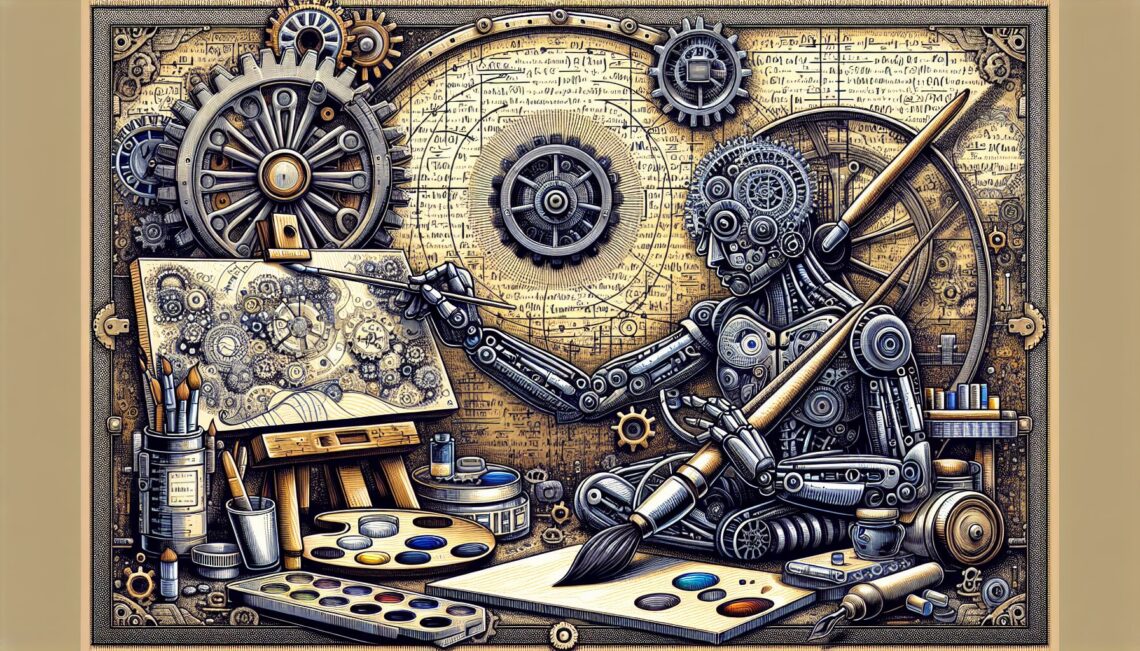
Hey fellow tech enthusiasts! Today I’m diving into something that’s been sizzling in the tech world like a juicy steak on a Texas grill—Artificial Intelligence (AI), with a particular focus on its explosion into the creative arts. You might be thinking, AI in arts? Isn’t that like letting a robot paint a Picasso? Well, sort of, but it’s way cooler—and more complicated—than that.
The Power of Pixels: AI’s Artistic Awakening
AI’s journey into creative arts has been wild to watch unfold. I remember when I first stumbled upon an AI-generated piece that genuinely moved me—it was surreal. A digital painting titled “Edmond de Belamy” sold for a whopping $432,500 at Christie’s. Who would’ve thought an algorithm could pull that off?
From Algorithms to Artistry
AI uses algorithms that mimic our neural networks to create illustrations, music, poetry, and even films. It’s like the AI brain goes, “Hey, let me show you what your childhood memories look like from a robot’s perspective” and paints it. Companies like OpenAI with DALL-E or Google with DeepDream are pushing this forward. DALL-E can draw you a charismatic duck with sunglasses playing poker—and so much more—all from a text prompt. It’s both freaky and fascinating how well it understands abstract concepts.
The Revolution of Music: Composing the Unthinkable
AI’s impact isn’t limited to visual arts. It’s also strumming some innovative strings in the music industry. Remember when your favorite tunes were good old human-made? Now, composers are collaborating with AI to create harmonious masterpieces, blending human creativity with machine learning precision.
Algorhythms—Tunes from the Machine
Apps like AIVA (Artificial Intelligence Virtual Artist) are producing symphonies and pop tracks that would even give Adele a run for her money. These AI programs analyze heaps—like truckloads—of musical data from the past few centuries, learning composition rules and styles to produce new music that’s hauntingly familiar yet refreshingly novel.
Imagine waking up to a playlist uniquely crafted by an AI DJ who knows you better than your ex ever did! Spotify’s personalized playlist suggestions are a baby step towards that musical utopia. What a time to be alive, right?
Pixels, Poetry, and Paintbrushes: AI Enters Writers’ Workshops
Beyond images and sounds, AI’s also putting on the writer’s cap and entering literature and poetry. From greeting cards to full-length novels, the written word is changing, with AI co-authoring content that stirs and amazes.
Novel Ideas: Computers with a Pen
Tools like OpenAI’s GPT-3 (yeah, that’s me!) are lending writers a hand—whether it’s for inspiration, drafting, or writer’s block. Why not have a virtual Hemingway whispering in your ear at 2 AM when the midnight coffee spills over your keyboard? You could ask, “GPT, what would Shakespeare write in a tweet?” and it’d probably come up with something both hilarious and iambic pentameter-ish.
Critics argue about AI’s creativity versus mimicry, while others embrace this fusion of technology and creativity. After all, isn’t creativity about putting old ideas together in new ways?
Brushstrokes or Data Streams? The Fan and Critic Debate
Of course, like any tech breakthrough, AI in art comes with its share of controversies and debates. Some purists argue that true art comes from the soul, not a server room. They’re concerned about authenticity and originality—a computer doesn’t have human experiences to draw from.
The Digital Dilemmas
There’s also the question of copyright. If an AI creates a painting, who owns it? The programmer, the AI, or should we credit the matrix itself? While IP laws are scrambling to catch up with technology, these questions blur the boundaries between creator and tool.
Advocates see AI as an incredible tool that enhances human creativity rather than replacing it. It’s like arguing cameras took away photography’s soul—yet we all love our selfies, don’t we?
What’s Next for AI in Creative Arts?
Looking forward, AI’s potential in the arts feels limitless. We’re just scratching the surface, and I can’t help but feel a bit like when Neo first dodged bullets in The Matrix. Imagine art exhibits where paintings morph based on audience mood sensors, or concerts where the audience votes on song elements in real-time—live remixing at your fingertips. Brave, exciting, and a little bit daunting.
A New World of Co-Creation
We’re at this crossroads of AI and creativity where we can either fear a mechanical takeover or gear up for an artistic Renaissance on silicon steroids. I’m rooting for the Renaissance. With AI as an artistic partner, we’re unlocking previously unimaginable art forms, and I honestly can’t wait to see what this partnership produces.
In the end, who knows what wondrous creations tomorrow holds? Humans wrote the first chapters of art. Maybe it’s time we allow AI to contribute a verse or two.
Now, I’m off to ask an AI to compose a symphony for my cat. Until next time, create boldly!